1. Demystifying the Names: What Are Fish Paper and Barley Paper?
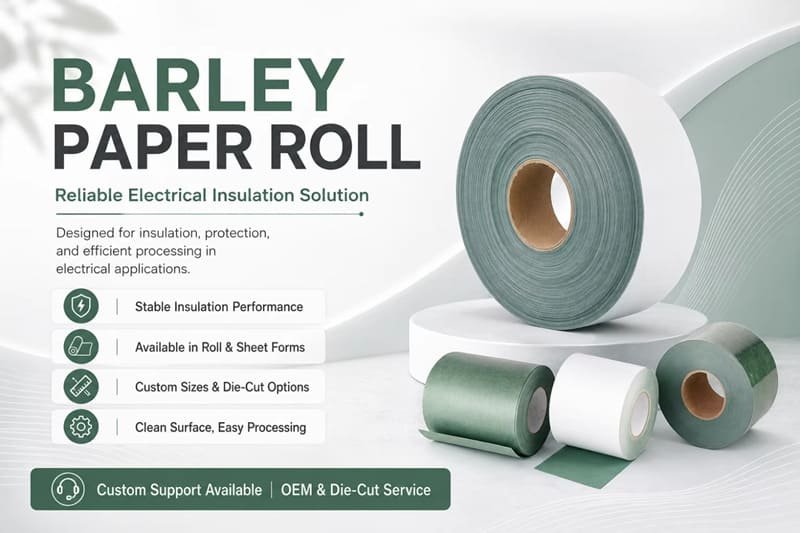
Step onto the floor of an electrical motor repair shop in North America, and someone will hand you a stiff, grey sheet and call it fish paper. Walk into an automated lithium battery assembly facility in Shenzhen, and technicians will hand you a flexible green roll and call it highland barley paper. At first glance, you might think you are dealing with two completely unrelated materials from opposite sides of the planet. In reality, both belong to the same proud family of chemically treated cellulose insulators, though they have evolved along different paths to serve distinct engineering needs.
What Is Electrical-Grade Fish Paper?
Fish paper is the long-standing trade name for the electrical grade of vulcanized fibre. It is not made from shredded newspapers or cardboard packaging. Instead, it is made of cotton rags or highly refined wood pulp fibers that undergo a chemical transformation. The result is a dense, hard, and resilient sheet material that behaves less like delicate paper and more like a high-strength engineering plastic. It is extraordinarily tough, hard to puncture, and naturally elastic. Electrical workers have relied on it for over a century under various historical trade names such as Vulcanex, Peerless, Forbon, Armite, and Leatheroid.
What Is Barley Paper (Highland Barley Paper / Qingke Paper)?
In Asian manufacturing and battery packaging centers, this material is universally known as highland barley paper, or Qingke paper (青稞纸), and often referred to as green shell paper. While traditional fish paper is usually supplied as a single, dense, solid-ply sheet, modern barley paper is commonly engineered as a multi-layer composite. In technical catalogs, it frequently carries the designation 6520 composite insulation paper.
This composite structure pairs a fibrous cellulose paper layer with a micro-thin layer of high-dielectric polyester film (PET). The cellulose paper provides tear resistance and cushion, while the polyester film blocks moisture and dramatically elevates electrical breakdown voltage. To make assembly fast and foolproof, barley paper is almost always shipped with a high-tack pressure-sensitive adhesive backing covered by a release liner, making it the universal standard for wrapping battery cells.
Why Is It Called “Fish Paper”? (Four Fascinating Theories)
Nobody uses fish bones, scales, or oils to manufacture modern vulcanized fiber, so why has this bizarre nickname survived for generations? If you ask older electrical technicians, you will hear several competing explanations:
- The Fish Skin Appearance: The most widely accepted visual explanation points to the raw surface finish. When thin sheets of vulcanized fiber are calendered under heavy steel rollers, the greyish-blue cellulose develops a slick, slightly shiny, and non-porous sheen that closely mimics the scaly skin of a freshly caught river fish.
- The German Translation Theory: Industrial historians trace the name to 19th-century European paper mills. In German, dense mechanical fiber boards were categorized as Fischerpappe. American dock workers and early electrical importers may have simply translated this phonetically into “fish paper,” cementing the term in English trade catalogs.
- The Historical Fish-Oil Connection: Back in 1729, early electrical experimenters discovered that treating fibrous plant papers with natural oils helped prevent electrical arcing across high-voltage gaps. Some early motor insulation recipes used paper saturated in dried fish oil to achieve moisture resistance and spark suppression in wet industrial environments.
- The Emergency Food Packaging Legend: A popular workshop legend from early Westinghouse factories claims that installation electricians ran short of insulation board while installing heavy switchgear. In desperation, they grabbed thick, waxed paper used by a nearby market to pack raw fish. To their delight, the dense, tear-proof paper handled sparks and grease without igniting, establishing a workshop nickname that never faded.
Regardless of which historical legend holds the most truth, the term “fish paper” became formally written into United States military specifications, ASTM testing codes, and NEMA industrial standards. Today, when an engineer writes “fish paper” on an engineering print, every fabricator on earth knows precisely which material to load into the cutting press.
2. Chemical Recipes and Manufacturing Processes
You cannot produce genuine fish paper by simply compressing wood chips in a conventional paper mill. If you place ordinary cardboard under an electric motor’s vibrating copper windings, mechanical friction and localized heat will rapidly grind the dry wood fibers into loose powder. Real electrical insulation requires a molecular transformation known as cellulose vulcanization.
The Chemical Alchemy of Zinc Chloride
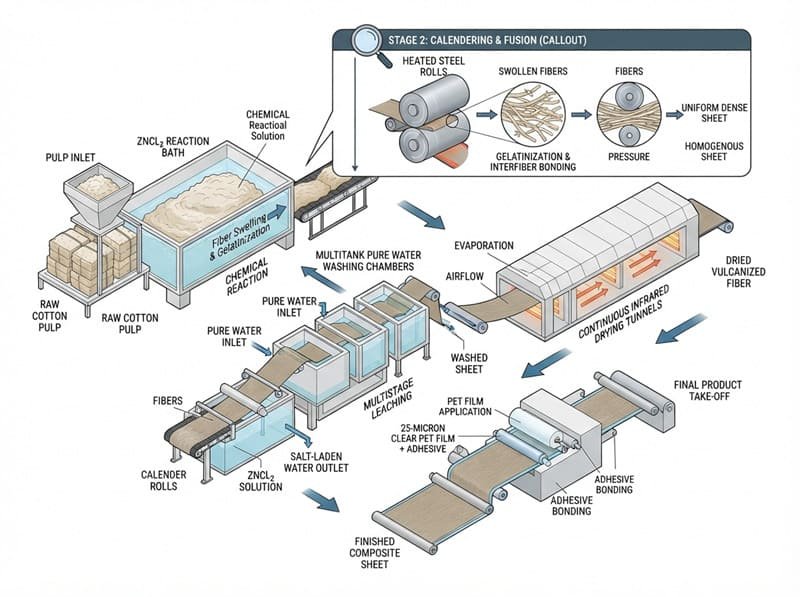
The manufacturing journey of pure fish paper starts with raw cotton rags or premium-grade unbleached wood pulp. These cellulose sheets are submerged into a concentrated, heated bath of zinc chloride (ZnCl2). Zinc chloride acts as a powerful swelling agent. It does not burn the fibers; instead, it attacks the outer crystalline walls of the cellulose molecules, forcing the plant fibers to hydrate, swell, and turn into a soft, gelatinous slurry.
While the cellulose is in this jelly-like state, the saturated sheets are pulled out of the chemical bath and run through massive heated steel laminating rollers. Under thousands of pounds of hydraulic pressure, the partially liquefied cotton fibers are squeezed together. Because the cell walls have softened and merged, the fibers do not merely stick together—they cross-link and fuse into a single, homogeneous, solid matrix.
Next comes the most crucial and time-consuming stage: leaching and extraction. The dense material passes through a series of pure water rinse tanks that gradually draw out every microscopic trace of zinc chloride. In heavy thicknesses, this chemical washing process can take several weeks of continuous water circulation. Once all salts are removed, the material is dried, calendered, and trimmed. The resulting sheet contains 100% pure cellulose. There are no synthetic glues, no formaldehyde binders, and no plastic resins holding it together. It will never de-laminate into loose layers, even when stamped, folded, or drilled.
Building Composite Barley Paper (The 6520 Structure)
While pure vulcanized fiber is fantastic for thick, rigid barriers, modern miniaturized electronics demand thinner profiles and higher moisture resistance. This led to the development of 6520 composite barley paper. The manufacturing process bonds two distinct engineering materials into a high-performance laminate:
- The Base Presspaper Layer: Made from dense, unbleached wood and cotton pulp, this layer provides physical bulk, puncture resistance, and mechanical cushioning against sharp metal burrs.
- The Polyester Film Barrier (PET / Mylar): A 25-micrometer (0.025 mm) film of electrical-grade polyethylene terephthalate is thermally laminated to the presspaper using a high-temperature resin. This plastic barrier acts as an impervious shield against moisture absorption and dramatically increases the material’s dielectric breakdown voltage.
Pressure-Sensitive Adhesive (PSA) Engineering
In high-speed assembly environments, mechanical fasteners and liquid glues slow down production. To streamline pack assembly, master rolls of barley paper are fed through precision slot-die coating lines that apply an aggressive pressure-sensitive adhesive to one side. High-reliability converters utilize industrial-grade acrylic adhesives (such as 3M 467MP or 3M 9448A). These advanced acrylic formulations maintain continuous bond strength across temperature swings from -40°C up to 180°C, ensuring the insulation never peels loose even under severe road vibration.
Sustainability Note: Because genuine fish paper is made purely of vulcanized plant cellulose without synthetic polymer binders, it is completely biodegradable and landfill-safe. When incinerated, it leaves behind non-toxic ash without releasing harmful halogenated gases.
3. Physical, Mechanical, and Dielectric Properties
Designing an electrical assembly without verifying technical material properties is like building a bridge without calculating load tolerances. If an insulation paper fails mechanically, it tears and causes a short circuit. If it fails dielectrically, high voltage punches an arc right through the barrier. Below is the side-by-side engineering data comparing standard vulcanized fish paper against composite highland barley paper.
| Engineering Property | Standard Fish Paper (Vulcanized Fibre) | Highland Barley Paper (6520 PET Composite) | Primary Test Standard |
|---|---|---|---|
| Base Material Structure | 100% Pure Vulcanized Plant Cellulose | Cellulose Presspaper + 25µm Mylar PET Film | ASTM D-710 / IEC 60667 |
| Available Thickness Range | 0.010″ to 0.250″ (0.25 mm to 6.35 mm) | 0.003″ to 0.020″ (0.08 mm to 0.50 mm) | Calibrated Micrometer |
| Dielectric Strength | 150 to 250 V/mil (6 to 10 kV/mm) | 400 to 600+ V/mil (15 to 25 kV/mm) | ASTM D-149 / IEC 60243 |
| Tensile Strength (Machine Direction) | 8,000 to 12,000 psi (55 to 83 MPa) | 100 to 150 N / 10mm width | ASTM D-828 / ISO 1924 |
| Continuous Thermal Limit | Class A: 105°C (221°F) continuous | Class B: 130°C (Short bursts to 180°C) | UL 746B / IEC 60085 |
| Cold Flexibility Ceiling | Maintains flex down to -40°C (-40°F) | Maintains flex down to -30°C (-22°F) | Cold Mandrel Bend Test |
| Specific Gravity / Density | 1.15 to 1.30 g/cm³ (Half the weight of Aluminum) | 1.10 to 1.25 g/cm³ | ASTM D-792 |
| Moisture Absorption (24h Immersion) | 40% to 60% (Raw, unsealed fiber) | Low to Moderate (Protected by PET barrier) | ASTM D-570 |
Dielectric Strength: The Shield Against High Voltage
Dielectric strength measures how much electrical voltage a material can withstand before its internal molecular bonds rupture and allow a spark to punch through. Standard vulcanized fish paper offers dependable dielectric resistance, typically rated between 150 and 250 volts per mil (around 6 to 10 kilovolts per millimeter). For typical household appliances, automotive alternators, and low-voltage control circuits, this is more than enough dielectric safety headroom.
However, composite barley paper takes dielectric performance to another level. Thanks to the integrated 25-micron polyester film layer, barley paper routinely delivers dielectric breakdown strengths between 400 and 600+ volts per mil (15 to 25 kilovolts per millimeter). Even a razor-thin 0.2 mm sheet of barley paper can block over 3,000 to 4,000 volts of potential difference, making it an incredible space-saving insulator for high-voltage battery modules.
Mechanical Toughness and Grain Anisotropy
If you take a fresh sheet of vulcanized fish paper and attempt to rip it with your hands, you will immediately notice its extraordinary tear resistance. Because the cellulose fibers were chemically fused under hydraulic rollers, fish paper achieves tensile strength ratings up to 12,000 psi (83 MPa). It can easily absorb the high-speed impacts of metal stamping tools and withstand the relentless physical vibration of electric motors.
However, design engineers must account for mechanical anisotropy. During the paper-making process, cellulose fibers naturally align predominantly in the direction of web travel. This is known as the Machine Direction (MD), while the perpendicular orientation is the Cross Direction (CD). The tensile strength of fish paper is roughly 20% to 30% higher along the Machine Direction than across the Cross Direction. When designing parts that require sharp 90-degree bends, fabricators always align the fold axis perpendicular to the Machine Direction to prevent fiber cracking.
Thermal Operating Ceilings and Cold Resilience
Standard vulcanized fiber is officially classified as a Class A electrical insulator, limiting continuous operation to 105°C (221°F). If a motor or transformer operates below this threshold, fish paper will easily outlive the equipment. However, prolonged exposure to temperatures above 130°C causes the cellulose to lose its natural moisture, leading to gradual embrittlement and a reduction in dielectric strength. Composite barley paper features higher thermal stability, enduring short-term temperature excursions up to 180°C or 200°C during battery charging spikes or spot-welding pulses.
Where natural fiber insulation truly outshines common synthetic plastics is in sub-zero environments. Many synthetic films like standard PVC become brittle, crack, and lose their impact resistance when temperatures drop below freezing. In contrast, vulcanized fish paper retains its elasticity and puncture resistance down to -40°C (-40°F), making it an ideal choice for outdoor winter machinery and cold-climate vehicles.
Moisture Absorption and Swelling Dynamics
Because fish paper is derived entirely from natural plant fibers without plastic binders, it is naturally hygroscopic—it absorbs water from surrounding air. In high-humidity environments, untreated fish paper can absorb 15% to 50% of its dry weight in water over several days. This moisture uptake causes the paper to swell dimensionally.
In mechanical plumbing seals and automotive gasket joints, this swelling is actually a prized benefit: when liquid contacts the gasket, the fiber swells tightly against metal mating flanges, creating a leak-proof hydraulic seal. However, in high-voltage electrical assemblies, excessive moisture absorption reduces dielectric breakdown strength. For this reason, high-voltage fish paper components must be stored in climate-controlled environments and are never recommended for continuous submersion in water or transformer oil.
4. Standards, Ratings, and Regulatory Classifications
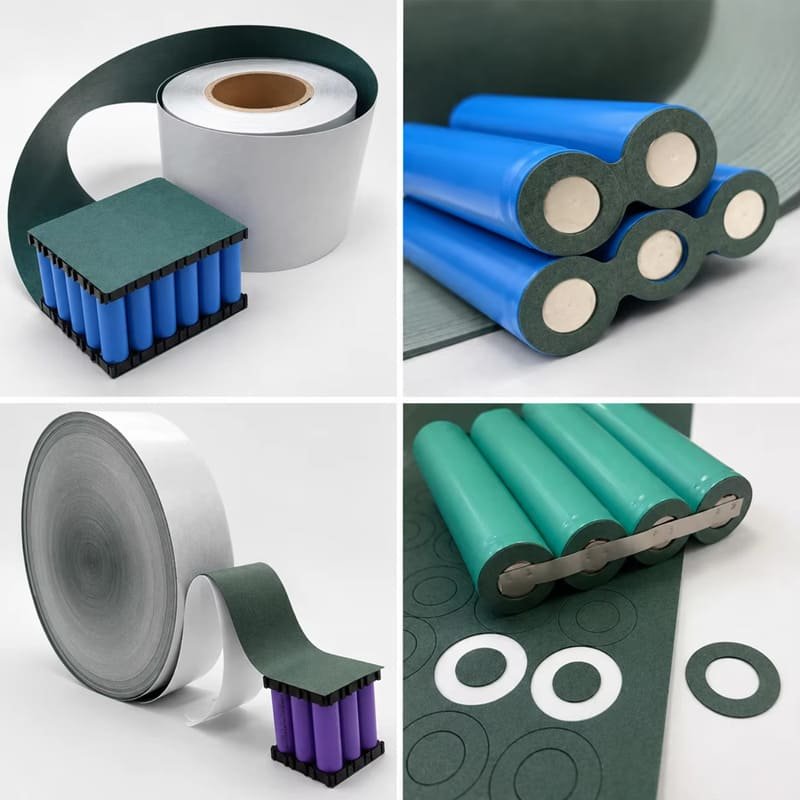
When you manufacture high-current electronics or industrial machinery, meeting recognized regulatory standards is mandatory. Insurance underwriters, independent testing laboratories, and government safety agencies require documented material compliance before electrical equipment can be legally sold. Vulcanized fiber and composite papers are governed by a robust framework of global standards.
| Regulatory Specification | Governing Body | Scope and Critical Performance Requirements |
|---|---|---|
| NEMA Grade F | NEMA (North America) | Commercial grade for mechanical toughness, slot liners, and basic washers. |
| NEMA Grade FR | NEMA (North America) | Flame-retardant grade treated with additives to achieve UL 94 V-0 flammability. |
| ASTM D-710 | ASTM International | Standard specification for vulcanized fibre sheets, rods, and round tubes. |
| IEC 60667-1 | International Electrotechnical Commission | Global specifications for vulcanized fibre used in electrical equipment. |
| UL 94 (HB vs. V-0) | Underwriters Laboratories | Flammability rating: Slow horizontal burn (HB) vs. self-extinguishing vertical burn (V-0). |
| MIL-F-1148 / MIL-I-24092 | US Department of Defense | Military defense standards for structural and electrical insulation materials. |
| JIS-C2315 | Japanese Standards Association | Japanese industrial criteria for vulcanized fiber electrical insulation sheets. |
NEMA Grade F vs. NEMA Grade FR
The National Electrical Manufacturers Association established two primary categories for vulcanized fiber:
- NEMA Grade F (Commercial Grade): The standard formulation used in general electrical insulation. It provides outstanding mechanical toughness, smooth punchability, and reliable dielectric insulation. It is the default choice for motor slot liners, transformer barriers, and physical spacers.
- NEMA Grade FR (Flame-Retardant Grade): This grade incorporates flame-suppressing mineral additives into the cellulose pulp during manufacturing. In the event of an electrical short, Grade FR suppresses flame propagation and achieves a certified UL 94 V-0 rating. Grade FR typically commands a 15% to 25% price premium over standard Grade F, but it is often mandatory for consumer electronics, enclosed power supplies, and appliance housings subject to strict fire safety mandates.
Understanding UL 94 Flammability Ratings
Underwriters Laboratories’ UL 94 standard measures how plastic and non-metallic materials burn when exposed to open flames:
Standard fish paper thicker than 0.031″ (0.79 mm) typically earns a UL 94-HB (Horizontal Burn) rating. This means the material burns slowly along a horizontal plane when ignited by an external flame. For enclosed consumer electronics or medical equipment, engineers frequently require UL 94 V-0 (Vertical Burn), meaning that when a vertical test strip is exposed to a flame for ten seconds, it extinguishes itself within ten seconds of flame removal without dripping flaming particles.
Global Compliance: RoHS, REACH, and Military Specs
Decades ago, older insulation materials frequently contained hazardous additives like lead, asbestos, or brominated flame retardants. Today, high-grade fish paper and composite barley paper are chemically inert and fully compliant with European RoHS (Restriction of Hazardous Substances) and REACH directives. Furthermore, for defense and aerospace contractors, military specifications like MIL-F-1148 and MIL-I-24092 provide standardized procurement codes for high-reliability military equipment.
5. Material Face-Off: Comparing Fish Paper, Nomex, Kraft, and Synthetics
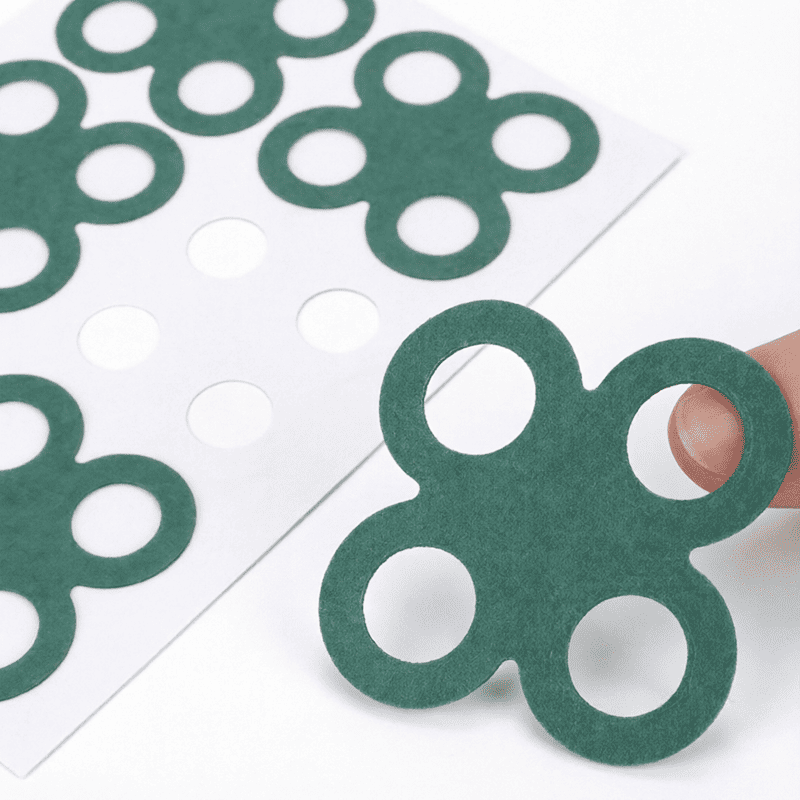
No single insulation material works best in every application. An engineer designing a high-speed traction motor for an electric train operates under completely different thermal constraints than a hobbyist building a 12-volt battery pack for a camping van. To avoid premature field failures or unnecessary material expenses, let’s examine how fish paper stacks up against its primary market alternatives.
| Insulation Material | Thermal Class Rating | Dielectric Strength | Puncture & Tear Resistance | Relative Cost Index | Primary Ideal Application |
|---|---|---|---|---|---|
| Fish Paper (Vulcanized Fibre) | Class A: 105°C (221°F) | Moderate (150–250 V/mil) | Outstanding (Burr-proof) | Low ($$) | Motor slot liners, stamped washers, battery separators |
| Highland Barley Paper (6520) | Class B: 130°C (Bursts to 180°C) | High (400–600+ V/mil) | Very Good (Flexible) | Low to Moderate ($$) | Cylindrical battery terminal rings, flexible wraps |
| DuPont™ Nomex® (Aramid) | Class H: 180°C to 220°C | High (500–800 V/mil) | Excellent | Very High ($$$$$) | EV traction motors, aerospace systems, dry transformers |
| Kraft Paper (Pressboard) | Class A: 105°C (in oil) | Moderate (200–400 V/mil in oil) | Poor to Moderate (Tears easily) | Very Low ($) | Oil-immersed utility distribution transformers |
| Kapton® (Polyimide Film) | Extreme: 200°C to 400°C | Very High (1,000+ V/mil) | Moderate (Prone to notch tears) | Extremely High ($$$$$$) | Spacecraft wiring, high-temperature coils, flex circuits |
| ITW Formex® (Polypropylene) | Class B: 115°C (UL 94 V-0) | High (500+ V/mil) | Good (Scores and folds) | Moderate ($$$) | Folded power supply shields, server computer baffles |
Fish Paper vs. DuPont Nomex: Preventing the Over-Engineering Trap
DuPont’s Nomex is widely considered the gold standard for high-temperature electrical insulation. Manufactured from synthetic aramid fibers, it laughs at temperatures over 200°C and maintains exceptional dielectric stability. In high-performance electric vehicles, commercial aviation, and mining locomotives, Nomex is worth every penny.
However, Nomex costs five to eight times more per square meter than vulcanized fish paper. If you are manufacturing an appliance motor, an electric scooter battery pack, or a consumer power tool that will never exceed 70°C in real-world use, wrapping it in Nomex wastes money without adding any practical safety benefit. Fish paper delivers equal electrical isolation and superior mechanical puncture resistance at a fraction of the cost.
Fish Paper vs. Transformer Kraft Paper: The Oil Factor
Diamond-dotted kraft paper and dense pressboard dominate the oil-immersed utility transformer sector. When submerged in clean mineral transformer oil, kraft paper performs exceptionally well because the oil displaces air pockets and elevates dielectric breakdown strength. However, in open-air ambient environments, kraft paper absorbs humidity, tears easily, and quickly deteriorates under mechanical vibration.
Conversely, fish paper should never be submerged in oil-filled transformers. Vulcanized fiber absorbs mineral oil and ambient moisture, leading to dimensional swelling and progressive loss of dielectric integrity. Fish paper is designed for dry-type, air-cooled electrical systems.
Fish Paper vs. Red Fiber Gaskets: Clarifying the Sourcing Confusion
One of the most common purchasing mistakes occurs when buyers confuse red fiber mechanical gaskets with electrical fish paper. Both stem from the vulcanized cellulose family, but their formulations serve completely different functions. Red fiber washers are engineered for mechanical compression and hydraulic sealing—they are soft enough to conform to pipe flanges and seal water or fuel joints. Electrical fish paper is rolled to higher densities, held to tight thickness tolerances, and rigorously spark-tested to verify dielectric insulation.
6. Battery Pack Engineering: Protecting Cylindrical and Prismatic Cells
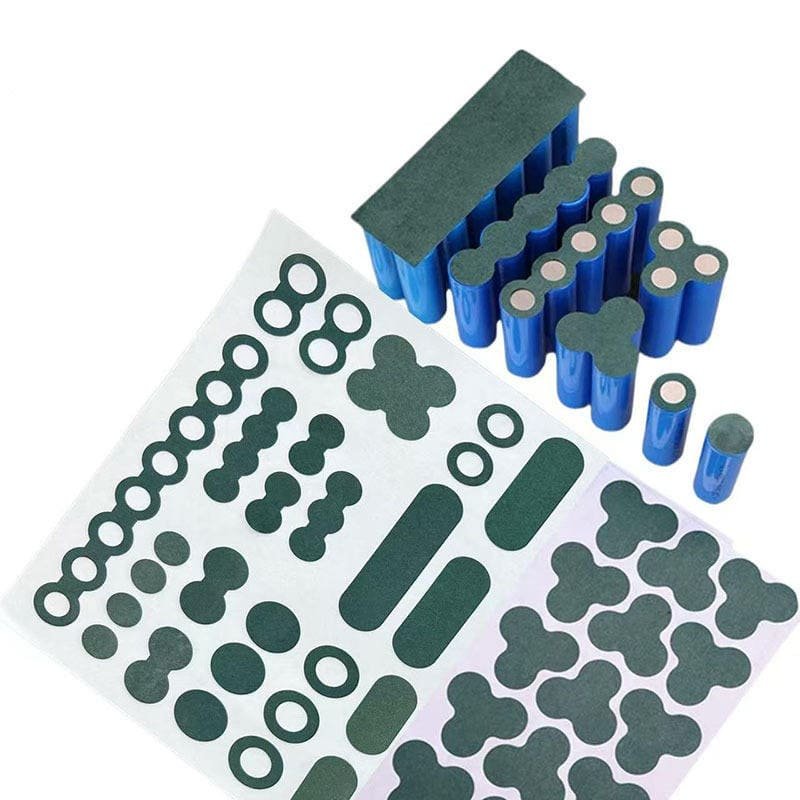
In the lithium battery world, energy density is king. Modern 18650 and 21700 cells pack enormous amounts of chemical energy into tiny steel cylinders. However, pack builders often overlook a simple design vulnerability that can lead to catastrophic failure.
The Dangerous Sub-0.5mm Positive Gap
If you peel off the colored heat-shrink wrap from an 18650 or 21700 cylindrical battery, you will discover that the entire outer steel can—the base, the long cylindrical walls, and the top rim—is connected directly to the negative terminal. The only positive portion of the battery is the small metal button at the very top.
The physical air gap separating that positive terminal from the negative shoulder is frequently less than 0.5 millimeters wide. Factory PVC shrink wrap covers this gap, but PVC has a very low thermal ceiling—it begins to soften and melt around 70°C to 80°C. If your battery pack heats up under heavy discharge loads, or if a spot-welded nickel strip rubs against that shoulder over thousands of road bumps, the soft plastic sleeve wears away. The moment that nickel tab touches the bare metal shoulder, a dead short circuit bypasses the cell’s internal resistance, dumping hundreds of amps into the rim and triggering thermal runaway.
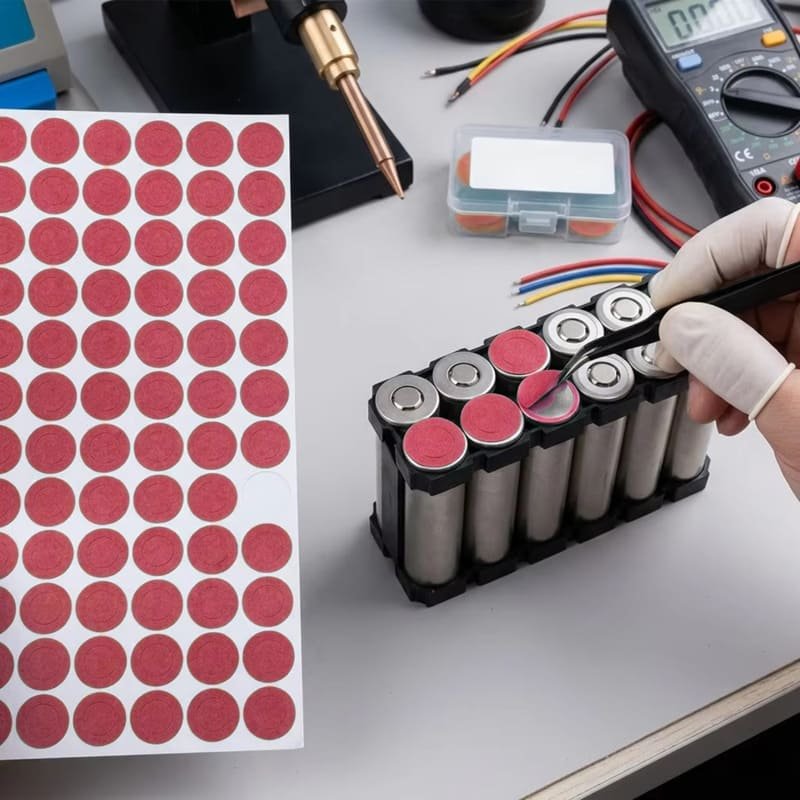
Critical Rule for Pack Builders: Always apply a pre-punched, adhesive-backed barley paper donut ring over the positive terminal before spot-welding nickel strips. This creates a puncture-proof barrier that keeps your pack safe even if the nickel shifts or experiences hard impacts.
| Critical Pack Location | Recommended Material | Specific Failure Mode Prevented |
|---|---|---|
| Positive Terminal Rim (Donut Washer) | Adhesive Barley Paper (0.2–0.3 mm) | Stops spot-weld burrs and shifted nickel from touching the negative can rim. |
| Between Series Cell Groups | Vulcanized Fish Paper Sheet (0.3–0.5 mm) | Prevents high-voltage inter-group short circuits between adjacent cell bricks. |
| Under Long Nickel / Busbar Runs | Adhesive Barley Paper Tape / Strips | Stops heavy busbars from wearing through the cell’s outer PVC shrink wrap. |
| BMS Circuit Board Underside | Fish Paper Sheet or Rigid G10 Board (0.5 mm) | Insulates sharp soldered pins on the BMS from rubbing against cell casings. |
| Enclosure Lining & Perimeter Barrier | Dense Fish Paper (0.5–1.0 mm) | Prevents external mounting screws or metal cases from puncturing cells during drops. |
| Prismatic Cell Dividers (280Ah LiFePO4) | FR4 / G10 Epoxy Sheet or Heavy Fish Paper | Stops expanding aluminum cell casings from rubbing together under compression. |
Prismatic Solar Cells (EVE 280Ah & 304Ah)
In home solar storage banks and RV power systems, builders routinely assemble 48-volt battery banks using sixteen heavy 280Ah or 304Ah aluminum-cased LiFePO4 cells. These large cells are wrapped in a thin blue PET film. As prismatic cells charge and discharge, their internal chemistry causes them to physically expand and contract.
If you clamp sixteen of these heavy cells together inside a steel compression box without inter-cell insulation, the thin blue film rubs away under cyclic movement. Because the cell casings are bare aluminum, metal-on-metal contact creates an instant inter-cell short circuit. Placing a 0.8 mm to 1.5 mm sheet of rigid FR4 fiberglass board or heavy-grade fish paper between every cell provides an indestructible barrier that easily withstands 300 kilograms of clamping force without crushing.
Preventing Defects on Automated Assembly Lines
Commercial battery module plants utilize automated taping machines that apply insulation rings to more than 4,000 cells per hour. However, high-speed automated taping can encounter three common defects:
- “The Flying Sticker”: If the cell top contains drawing oil or the adhesive tape has aged, the ring will fail to bond. It lifts off, floats inside the carrier tray, and jams the spot-welding head. Factories use inline plasma surface treatment to clean cell tops immediately before pasting.
- “The Half-Moon”: If the mechanical feeder drifts by just 0.2 mm, the ring applies off-center, resembling a crescent moon. If the ring covers part of the positive terminal, the spot welder or laser beam strikes the paper instead of the metal, destroying the weld. Vacuum-drum feeding heads hold alignment to within ±0.1mm to eliminate this issue.
- “The Static Jam”: In dry winter air, peeling continuous barley paper generates thousands of volts of static electricity. The lightweight paper rings stick to cutting blades like magnets. Modern lines install ionizing air blowers across the cutting head to continuously neutralize static buildup.
7. Heavy Electrical Machinery: Motors, Transformers, and High-Voltage Hardware
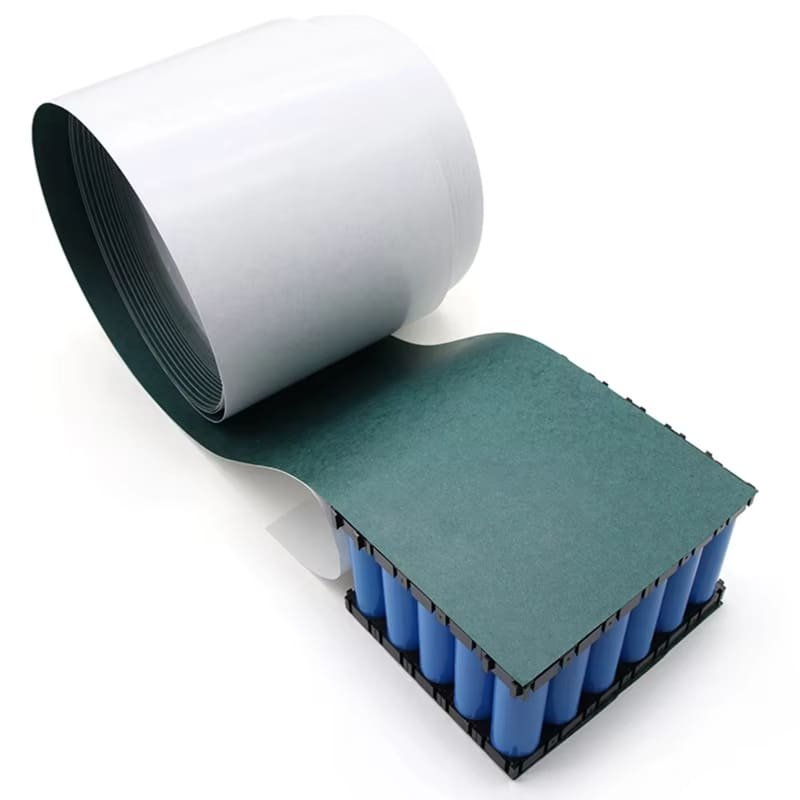
Long before lithium-ion batteries transformed transportation, vulcanized fiber established its reputation inside the electric motors and high-voltage switchgear that powered the industrial revolution. In motor rewinding shops around the world, fish paper remains a primary insulating material.
Motor Stator Slot Liners and Wedges
Inside an electric motor stator, copper magnet wires are wound tightly through narrow slots cut into stacked steel laminations. The punched steel teeth of these laminations have sharp, abrasive edges. When the motor starts up, massive inrush currents create powerful magnetic forces that cause the copper coils to vibrate against the slot walls. If the thin enamel insulation on the copper wire scratches against bare steel, an instantaneous ground fault destroys the motor.
Motor winders prevent this by folding U-shaped channels of fish paper—known as slot liners—and sliding them into each stator slot before inserting the copper coils. Once the windings are packed into place, technicians drive a rigid strip of vulcanized fiber called a slot wedge down the top channel. The fish paper liner acts as an elastic, abrasion-resistant buffer that absorbs magnetic pulses and motor vibration without tearing.
Arc Chutes and Circuit Breaker Baffles
When an industrial circuit breaker trips under thousands of amps of fault current, mechanical switch contacts violently snap apart. However, high-voltage electricity continues to bridge the air gap, creating an intense, roaring electrical arc reaching several thousand degrees. Circuit breakers direct this arc into a chamber called an arc chute.
Vulcanized fish paper is widely used to line arc chute side barriers. When exposed to an electrical arc, the organic cellulose emits a small puff of neutral de-ionizing gas. This gas rapidly cools the electrical arc and helps extinguish it. Unlike brittle ceramics that can shatter under thermal shock, or synthetic plastics that melt into conductive carbon soot, fish paper quenches electrical arcs cleanly while retaining its structural integrity.
8. Fabrication, Converting, and Design for Manufacturing (DFM)
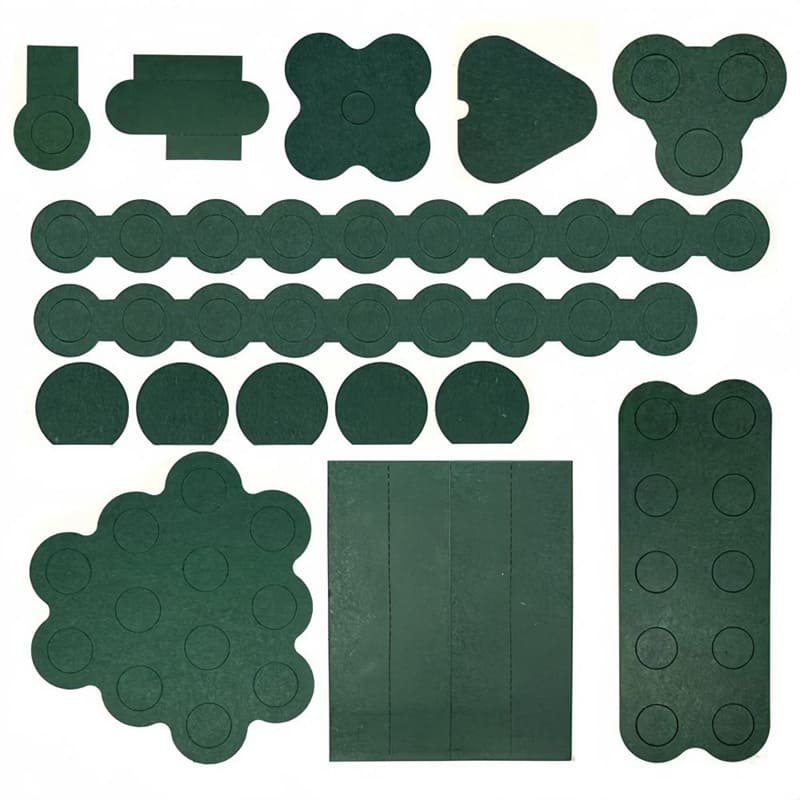
Because fish paper is remarkably dense and tough, cutting it cleanly requires the right manufacturing equipment. Using dull blades or improper tooling can crush, fray, and tear the cellulose fibers, creating fuzzy edges that compromise assembly precision.
Three Primary Converting Technologies
- Rotary Die-Cutting (High-Volume Production): For stamping hundreds of thousands of battery terminal washers or motor slot liners, rotary die-cutting is unmatched. Hardened cylindrical steel dies rotate against an anvil roll, cutting continuous webs of adhesive-backed barley paper at high speeds with tight tolerances and automated waste removal.
- Steel Rule Flatbed Die-Cutting (Medium Production Runs): Hardened steel blades formed into custom shapes are mounted into wood blocks and pressed down by hydraulic presses. This cost-effective method handles thicker fish paper sheets up to 1.5 mm thick without splitting the material.
- CNC Laser & Digital Knife Cutting (Prototyping & Custom Batches): For prototype validation or small custom production runs, digital knife plotters and CO2 lasers eliminate expensive tooling costs. Technicians simply import a 2D DXF vector drawing and begin cutting immediately. When laser cutting, high-pressure air assist is essential to minimize edge charring.
Design for Manufacturing (DFM) Rules
To ensure smooth manufacturing and avoid field failures, keep these practical design guidelines in mind:
- Respect Grain Orientation: Always align bend lines perpendicular to the Machine Direction (MD). Bending fish paper parallel to the grain creates high stress that can cause cracking along the fold. Folding across the grain results in a clean, resilient hinge.
- Maintain Safe Bridge Widths: When designing multi-hole battery gaskets, maintain a minimum bridge width of at least 1.5 mm to 2.0 mm between adjacent hole cutouts. Ultra-thin bridges can stretch or tear during automated tape application.
- Pre-Assembly Conditioning: If fish paper sheets have been stored in a humid warehouse, pre-dry them in an oven at 60°C to 80°C for 2 to 4 hours before applying adhesives or assembling high-voltage hardware to drive out absorbed moisture and restore peak dielectric strength.
9. Sourcing, Storage, and Quality Inspection Guidelines
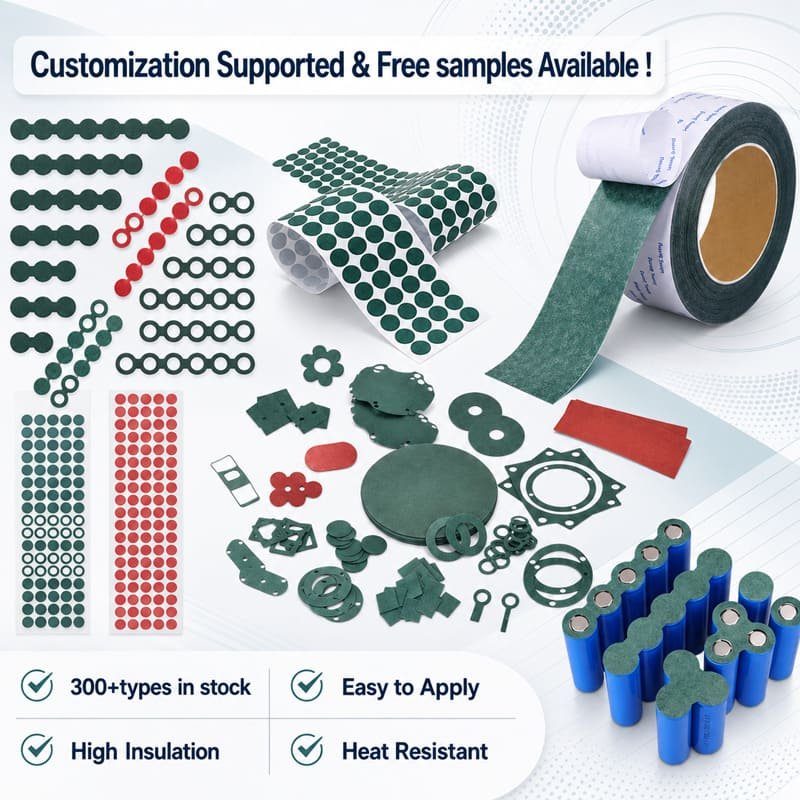
Consistently high-quality electrical insulation starts long before materials reach your production line. Because cellulose-based insulators react to ambient humidity, proper warehouse storage and receiving inspection are essential to prevent manufacturing defects.
Proper Storage and Environmental Control
Always store fish paper and barley paper in its original factory moisture-barrier packaging until ready for processing. Maintain storage rooms between 10°C and 30°C (50°F to 86°F) with relative humidity strictly below 60%. Never store rolls directly against cold concrete floors or near radiant heat sources. Always store master rolls horizontally on support cradles to prevent flat spots that can jam automated feeding equipment.
| Quality Checkpoint | Acceptable Factory Standard | Rejection Trigger |
|---|---|---|
| Thickness Tolerance | Within ±0.002″ (±0.05 mm) across the sheet width | Tapered thickness variation exceeding ±0.003″ |
| Edge Quality | Sharp, clean slit edge with zero fiber fuzz | Frayed edges, crushed margins, or fiber tears |
| Flatness and Curl | Lies flat under light hand pressure | Severe curling or wavy edges that jam feeders |
| Surface Contamination | Uniform color, zero conductive metallic specks | Dark oil stains, embedded metal dust, or voids |
| Adhesive Performance | Aggressive tack, smooth release liner separation | Adhesive transfer to liner or gummy edge ooze |
Buyer’s RFQ Specification Template
When requesting quotes from insulation fabricators, provide comprehensive technical specifications to ensure accurate pricing and lead times:
- Material Grade: Specify standard fish paper (NEMA Grade F / ASTM D-710) or composite barley paper (6520 grade with 25µm PET).
- Target Thickness: State exact gauge (e.g., 0.25 mm / 0.010″ or 0.50 mm / 0.020″).
- Adhesive Requirements: State whether adhesive is required, specifying adhesive type (e.g., 3M 467MP acrylic transfer tape).
- Delivery Format: Specify master sheets (e.g., 48″ x 96″), custom slit rolls (state width and core size), or precision die-cut parts based on your attached DXF drawing.
- Documentation: Request an official Certificate of Conformance (CoC), RoHS testing verification, and lot batch numbers for full traceability.
10. Frequently Asked Questions (FAQ)
Fish paper is an electrical insulation material engineered to prevent electrical arcing, short circuits, and mechanical wear. Its primary uses include lining stator slots and coils in electric motors, providing dielectric barriers in dry-type transformers, shielding high-voltage circuit breaker baffles, and isolating cell terminals, series connections, and busbars in custom lithium battery packs.
While often used interchangeably in trade conversations, they are technically distinct. Fish paper refers to dense, 100% vulcanized plant cellulose fiber board. Barley paper (Highland Qingke paper) typically refers to a thinner, flexible composite combining cellulose presspaper with an integrated 25-micron polyester (PET) film layer and adhesive backing, optimized for wrapping cylindrical battery cells.
The name originated in the 19th century and has multiple historical explanations. The most common theory is that raw calendered vulcanized fiber has a slick, grey-green sheen resembling scaly fish skin. Other historical accounts attribute the name to early German trade terms (Fischerpappe), 18th-century fish-oil paper treatments, or dockside fish packaging paper repurposed by early electrical workers.
On cylindrical lithium cells, the positive top terminal button is separated from the negative steel casing rim by less than 0.5 mm. Spot-welding burrs, shifted nickel strips, or road vibration can wear through the factory plastic wrapper, causing a dead short and thermal runaway. Applying an adhesive barley paper ring over the top creates an abrasion-resistant barrier that protects the negative rim.
No. Standard PVC electrical tape should never be substituted for fish paper in battery packs or electrical machinery. Standard vinyl tape begins softening at 60°C to 80°C, stretches under mechanical tension, and is easily punctured by sharp metal burrs. Fish paper and barley paper withstand higher temperatures and provide high puncture resistance.
Generally, no. Fish paper is not recommended for oil-immersed transformers. Vulcanized fiber absorbs mineral transformer oil and ambient moisture, causing the material to swell dimensionally and gradually degrading its dielectric breakdown strength. Oil-filled utility transformers rely on diamond-dotted kraft paper or dense pressboard designed specifically for stable oil immersion.
Standard commercial fish paper (NEMA Grade F) carries a UL 94-HB flammability rating, meaning it burns slowly when exposed to sustained flame. However, flame-retardant formulations (NEMA Grade FR) contain chemical suppressants that achieve a certified self-extinguishing UL 94 V-0 rating, preventing fire spread in enclosed consumer appliances and switchgear.
Fish paper is rated as a Class A electrical insulator, meaning it operates continuously up to 105°C (221°F). Composite barley paper can handle short-term temperature excursions up to 180°C. For applications operating continuously above 130°C, engineers should specify Class H materials such as DuPont Nomex aramid paper.
Nomex and Kapton provide higher temperature resistance (180°C to 400°C) and superior dielectric ratings, making them essential for aerospace systems and electric train motors. However, they cost between five to ten times more than fish paper. Fish paper provides outstanding mechanical puncture resistance at a much lower cost for builds operating below 105°C.
Yes. Both fish paper and adhesive barley paper cut cleanly on CNC drag-knife tables, CO2 laser cutters, and rotary die presses. Fabricators can take your 2D DXF or DWG vector drawings and produce custom full-pack battery gaskets, motor slot liners, and complex washers with sub-millimeter precision.
11. Summary and Practical Takeaways
When you step back and evaluate high-current electrical engineering, it is easy to focus on high-profile components like powerful microcontrollers, thick copper busbars, and high-energy-density battery cells. Yet, without dependable dielectric insulation quietly doing its job in the background, sophisticated hardware can fail in seconds. Fish paper and barley paper prove that classic material science remains essential to modern clean energy technology.
As you plan your upcoming engineering builds, keep these core principles at the forefront of your design process:
- Match the Material to Mechanical and Thermal Demands: Choose dense, vulcanized fish paper when you need rigid physical spacing, punch-formed durability, or arc-quenching capability. Select composite barley paper when your design requires thin flexibility, pre-applied adhesive, and moisture-resistant cylindrical cell wrapping.
- Design with Grain Direction in Mind: Always plan critical folds perpendicular to the Machine Direction (MD) to prevent cracking, and orient cut parts to align maximum tensile strength with structural stress axes.
- Never Compromise on Terminal Isolation: On cylindrical lithium battery builds, the sub-0.5mm gap surrounding the positive terminal cap is an inherent design hazard. Installing an inexpensive insulation ring is the most cost-effective safety measure you can incorporate into a battery pack.
High-reliability electrical assemblies require balance: clean, low-resistance conductors carrying heavy current, paired with tough, reliable insulators keeping that power where it belongs. When you pair quality insulation with precision-cut conductors, you build electrical equipment that runs cool, stays safe, and stands the test of time.
Build Safer, Cleaner Battery Packs with Matching Precision Components
Are you tired of hand-cutting uneven insulation rings or struggling with misaligned busbars on custom battery builds? When building reliable power assemblies, pairing your insulation sheets with precision-cut conductors makes all the difference.
At CustomNickelStrips.com, we specialize in high-precision laser-cut pure nickel strips, copper-nickel composite busbars, and custom-cut insulation gaskets tailored directly to your CAD drawings. Send us your project dimensions, and let our team help you build cleaner, safer, and more durable packs today!