1. Defining the Copper Busbar: The Power Distribution Hub
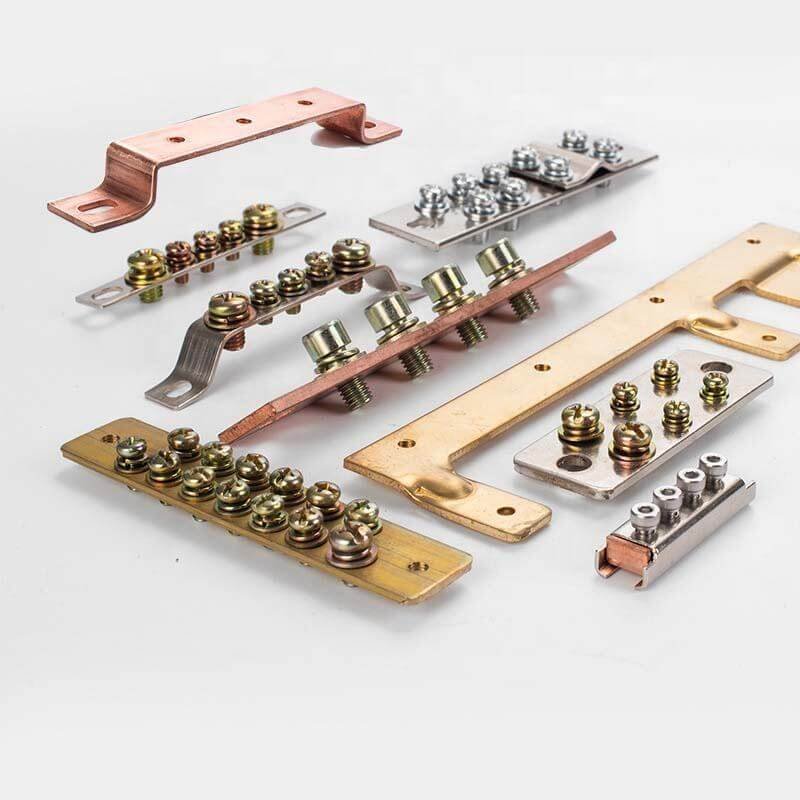
At its heart, a copper busbar is a solid metallic conductor used to carry a substantial amount of electrical current. While a wire is made of many tiny strands of copper twisted together, a busbar is one single, solid piece. This simple difference in shape changes everything about how the electricity behaves.
The name “busbar” actually comes from a Latin word: omnibus. In English, that means “for all.” Think of a bus in a city—it picks up a lot of people from different stops and carries them all together. An electrical busbar does the same thing. It picks up electrical current from a power source, like a battery or a generator, and carries it “for all” the different circuits in the system. It is a central hub. Instead of running ten thick wires from a battery to ten different parts of a machine, you run one solid busbar, and everything just plugs into it.
The market for these parts is growing fast. In 2024, the market for new energy vehicle busbars was worth about $1.2 billion. By the year 2033, experts think it will grow to $4.5 billion. That is because busbars are much better than wires for high-power jobs. They take up less space, they are easier to install, and they don’t get as hot. In an electric vehicle (EV), space is very tight. You can’t fit a bunch of huge cables under the floor. But you can fit a flat, custom-shaped copper busbar perfectly around the battery cells. It keeps the system organized and safe, reducing the risk of a messy “rats nest” of wires that could lead to a short circuit.
Why Busbars Surpass Traditional Wiring
Engineers choose busbars over cables for four main reasons:
- Current Density: A flat bar has a lot of surface area. This allows it to carry much more current than a round wire of the same weight.
- Compactness: Because they are flat and rigid, they can be packed tightly together. This is essential for modern electronics that need to be small.
- Reliability: A solid bar doesn’t have tiny strands that can break over time. It is a single piece of metal that can last for decades.
- Thermal Management: Copper is a great heat conductor. A busbar can pull heat away from sensitive electronics and release it into the air much faster than a wire covered in thick plastic.
2. Material Science: Selecting the Right Copper Grade
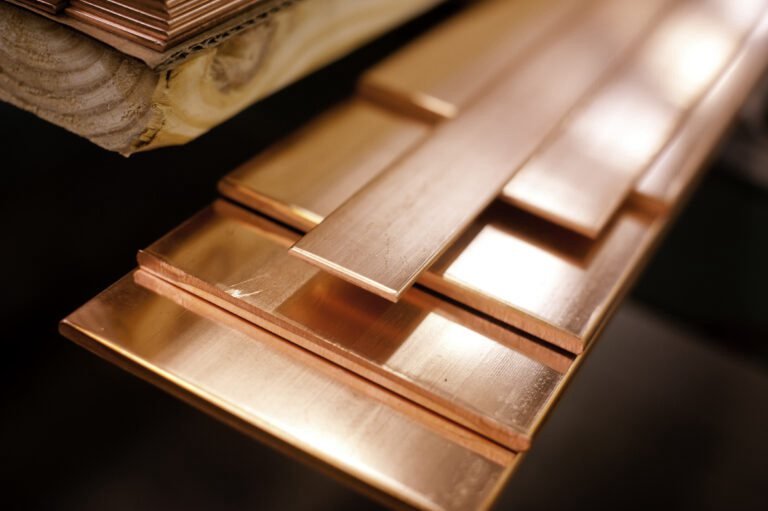
Copper is used for busbars because it is the world’s standard for moving electricity. In fact, back in 1913, the world decided on a standard called the International Annealed Copper Standard (IACS). Pure copper was given a score of 100%. Every other metal is compared to that. For example, aluminum only scores about 62%. This means copper is the “gold standard” for moving electrons with the least amount of resistance.
However, you can’t just use any old piece of copper. There are many different “grades” or types of copper used in busbar manufacturing. The type you choose depends on how much power you are moving and how you plan to build the part. Most busbars are made from a type called C110 (ETP), but there are others for special jobs.
| Copper Variant | Common Grade | Copper Purity | Key Engineering Benefit |
|---|---|---|---|
| Electrolytic Tough Pitch | ETP / C11000 | 99.90% | The industry standard. Great conductivity and easy to work with. |
| Oxygen-Free Copper | OF / C10200 | 99.95% | Resists hydrogen embrittlement. Best for high-heat welding. |
| Electronic Grade | C101 | 99.99% | Ultra-pure. Used in high-end electronics and aerospace. |
| Silver-Bearing Copper | C110 (Ag) | 99.90%+ | Stays strong even at very high temperatures. |
| Beryllium Copper | CuBe | Alloy | Extremely strong and hard. Used for heavy-duty connectors. |
For most jobs, ETP Copper (C11000) is the winner. It has excellent electrical conductivity and is easy to cut, punch, and bend. But if you are building something that needs to be welded, like a battery pack for a spaceship or a high-end electric car, you might need Oxygen-Free Copper. Why? Because when you heat up regular copper to weld it, the tiny amount of oxygen inside can react and cause the metal to crack. Oxygen-free copper doesn’t have this problem, so the welds are much stronger.
We also have alloys like Chromium Copper. This is copper mixed with a tiny bit of chromium. It is used when the bar needs to be very tough and resist wearing down, like in a giant switch that opens and closes thousands of times. By picking the right grade, engineers can make sure the busbar lasts for 20 or 30 years without ever failing.
3. Engineering and Sizing: The Math Behind the Power
Choosing the right size for a busbar is the most important part of the whole project. If the bar is too small, it will act like a thin straw trying to move a whole gallon of water. It will get very hot, waste energy, and could even melt the parts around it. If it is too big, it is a waste of money and adds too much weight to the project.
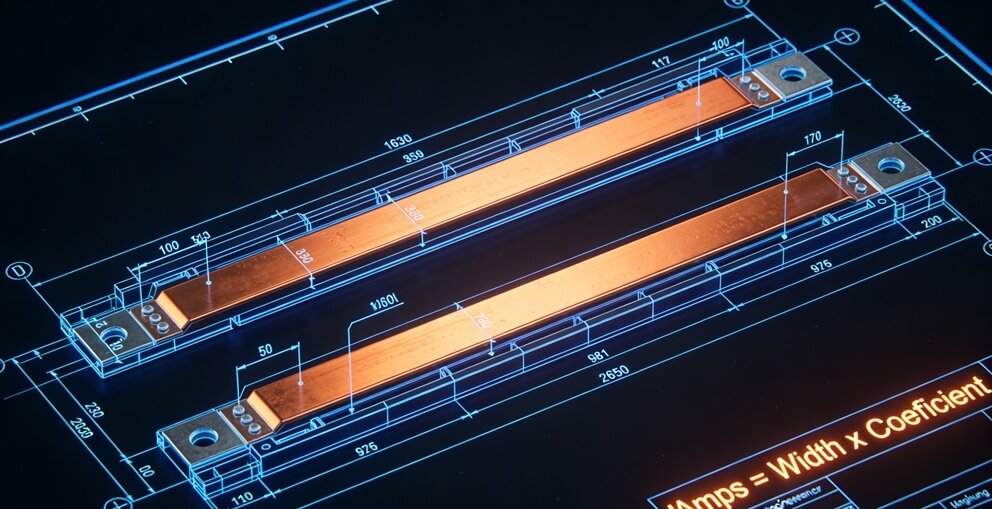
Engineers use something called “Ampacity” to figure out the right size. Ampacity is just a fancy word for how much current (Amps) a bar can carry before it gets too hot. A common rule of thumb used by professionals is based on the width and thickness of the bar. For a single copper bar, the formula is simple:
Current Capacity = Width of the bar (mm) × Thickness Coefficient
The “Thickness Coefficient” is a number that changes depending on how thick the bar is. For example, a 10mm thick bar might have a coefficient of 18, while a 5mm bar might have a coefficient of 13. Let’s look at how this works in real life with multiple layers of copper. When you stack bars together, they can’t cool down as easily because they are touching, so the math changes.
| Configuration | Current Capacity Calculation | Empirical Factor |
|---|---|---|
| Single Copper Bar | Width × Thickness Coefficient | 1.0 (Baseline) |
| Double Copper Bars | Single Bar Capacity × 1.58 | 1.56 – 1.58 |
| Triple Copper Bars | Single Bar Capacity × 2.0 | 2.0 |
| Four Layer Bars | Single Bar Capacity × 2.45 | 2.45 (Not suggested for standard use) |
For example, if you have a 100mm wide bar that is 10mm thick, and the coefficient is 18, that single bar can carry 1,800 Amps. If you put two of those bars together, you don’t get 3,600 Amps. Because of the heat, you only get about 2,940 Amps. This is why engineers have to be very careful. They also have to think about the temperature of the room. Most calculations are for a room at 25°C. If the room is 40°C, the copper can’t get rid of its heat as easily, so you have to lower the power rating by about 15%.
Precision is also key in manufacturing. When making a custom busbar, the thickness should be accurate within ±0.05 mm. If the bar is slightly thinner than the design, it could overheat. If the holes for the bolts are in the wrong spot by even 0.1 mm, the bar might not fit into the machine. This is why high-tech factories use lasers to cut the copper and robots to check the size of every piece.
4. Customization: Surface Plating and Finishes
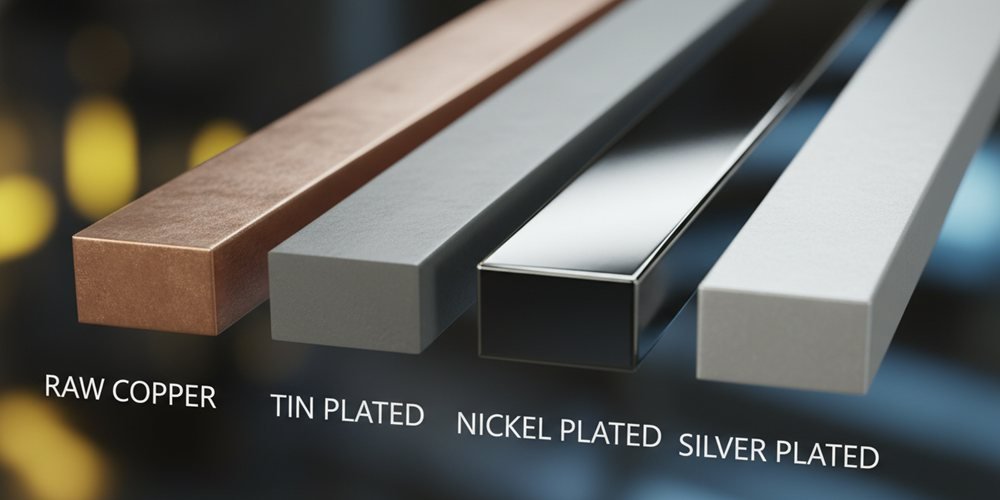
If you leave a piece of copper outside, it will eventually turn brown or green. This is called oxidation. In your home, it might look pretty, but in an electrical system, it is a disaster. That green layer doesn’t conduct electricity very well. It creates resistance, which creates heat. To stop this, busbars are usually “plated” with a thin layer of another metal. This isn’t just for decoration—it is a protective shield that keeps the power flowing smoothly.
The three most common types of plating are Tin, Nickel, and Silver. Each one has a specific job to do. Engineers choose the plating based on where the busbar will live and how much money they have for the project.
| Plating Type | Contact Resistance (Low is better) | Main Benefit | Common Use Case |
|---|---|---|---|
| Tin (Sn) | 50 – 80 µΩ·cm² | Lowest cost, very easy to solder. | Solar panels and home energy storage. |
| Nickel (Ni) | 20 – 40 µΩ·cm² | Best corrosion resistance, stays strong in heat. | Electric vehicle (EV) batteries. |
| Silver (Ag) | 5 – 10 µΩ·cm² | Highest conductivity, extremely low resistance. | Spaceships, high-end cars, and research labs. |
Nickel plating is a very popular choice for electric cars. Why? Because cars vibrate a lot and get very hot. Nickel is tough and doesn’t flake off. It keeps the electrical connection “stable” for the whole life of the car. Tin plating is the most common choice for things like solar power because it is affordable and does a great job of stopping rust. Silver plating is the “luxury” option. It is the best conductor in the world, but it is expensive. It is used when every tiny bit of energy matters, like in high-tech aerospace parts.
Sometimes, engineers also use Epoxy Powder Coating. This isn’t a metal; it’s a type of hard plastic paint. It is used to “insulate” the bar. This allows you to put the busbars very close to each other without worrying about them touching and causing a spark. It is like putting a safety jacket on the copper.
5. Bending and Shaping: Designing in Three Dimensions
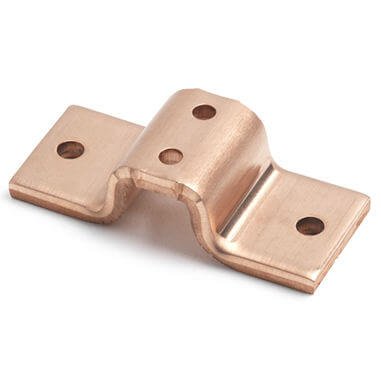
A busbar doesn’t always have to be a straight piece of metal. In fact, most busbars are bent into complex shapes to fit into small spaces. Think of it like a puzzle piece. In an electric vehicle, the busbar might need to curve around the cooling system and then dive down to reach the motor. This is called custom bending.
Bending copper is a bit of a science. If you bend it too sharply, you can crack the metal. When the metal cracks, it becomes thin in that spot, which creates a “hot spot” where electricity can’t flow easily. To prevent this, engineers follow the 3x Thickness Rule. This means the radius of the bend should be at least three times as thick as the metal bar itself. If the bar is 5mm thick, the curve needs to be at least 15mm wide. This keeps the metal strong and safe.
There are three main ways busbars are shaped:
- CNC Forming: A computer-controlled machine bends the copper with perfect accuracy. This is used for complex parts that need to be exactly the same every time.
- Stamping: A giant machine presses the copper into a mold (called a die). This is the fastest way to make thousands of parts for a car factory.
- Manual Bending: For small projects or prototypes, workers use special tools and jigs to bend the copper by hand.
Before any metal is actually bent, smart designers use 3D CAD Simulation. They use a computer to test the “deflection” of the bar. This shows them if the bar will bend too much or vibrate too much when the car is driving. By using this software, they can fix mistakes on the computer instead of wasting expensive copper. This saves time and ensures that the final product is as stiff and safety-certified as possible.
6. Insulation and Safety: Protecting the High-Voltage Highway
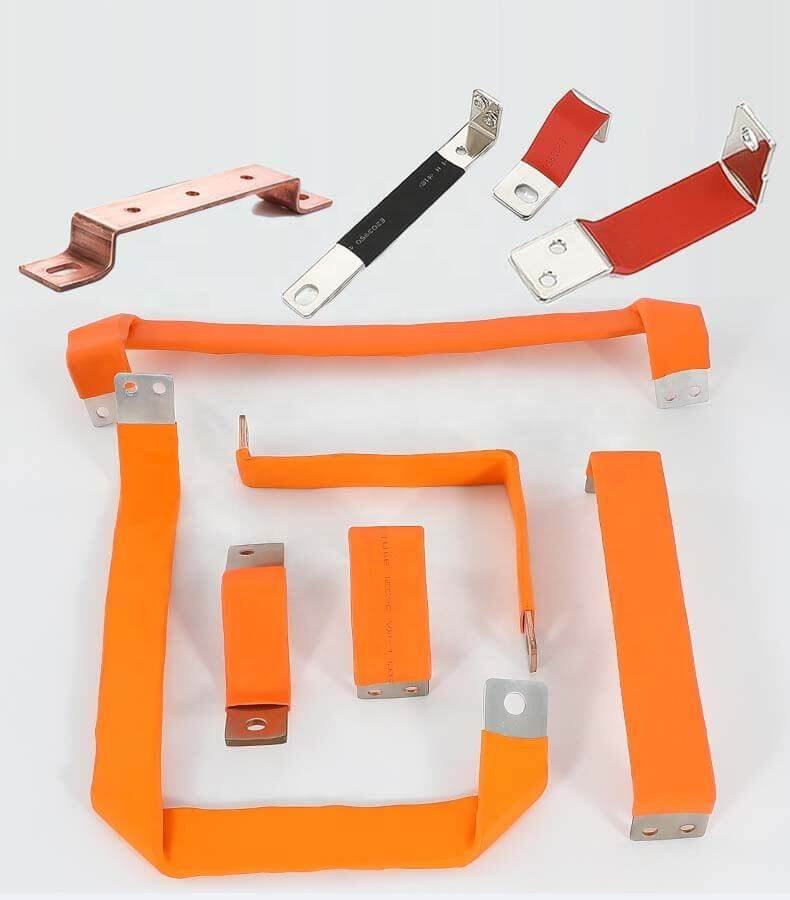
As our world moves toward higher and higher voltages—like the massive 800V systems used in the fastest electric car chargers—safety becomes the number one priority. Bare copper is an amazing conductor, but it is also dangerous if it isn’t managed correctly. If a bare copper busbar is placed too close to another metal part, the electricity can actually jump through the air in a giant spark called an “arc.” This is why busbar insulation is so vital. It acts like a protective skin, keeping the electricity exactly where it belongs.
Insulation allows engineers to pack busbars very tightly together. In a modern battery pack, space is a luxury. Without insulation, you would have to leave huge gaps between the bars to prevent sparks. With high-tech coatings, you can put them almost touching each other. This makes the whole machine smaller, lighter, and more powerful. But not all insulation is the same. Engineers choose the material based on how hot the bar will get and how much voltage it needs to block.
| Insulation Material | Dielectric Strength (kV/mm) | Max Operating Temp | Engineering Advantage |
|---|---|---|---|
| PVC Heat Shrink | 20 kV/mm | 105°C | Cost-effective, very flexible, easy to apply to bent bars. |
| Polyimide (Kapton) | 30 kV/mm | 250°C | Extremely thin and strong. Handles extreme heat in aerospace. |
| Epoxy Powder Coating | 50 kV/mm | 180°C | A hard, permanent shell. Best for complex 3D shapes. |
PVC Heat Shrink tubing is the workhorse of the industry. It is like a plastic straw that shrinks when you heat it up, hugging the copper bar perfectly. It’s great for general use. However, if you are building a high-performance racing car, you might use Epoxy Powder Coating. This is a special powder that is sprayed onto the copper and then “baked” in a giant oven. It turns into a hard, smooth shell that is incredibly tough. It won’t peel off, and it can block a massive amount of electricity even if the layer is very thin.
The most important number for insulation is Dielectric Strength. This tells you how much voltage the material can block per millimeter of thickness. Epoxy is the king here, blocking 50,000 volts for every millimeter! This allows designers to use very thin coatings, which helps the busbar stay cool because heat can pass through a thin layer much faster than a thick one. All professional insulation must also meet “UL 94-V0” standards, which means that even if a fire starts, the insulation will stop burning on its own within seconds.
7. The Great Debate: Copper vs. Aluminum Busbars
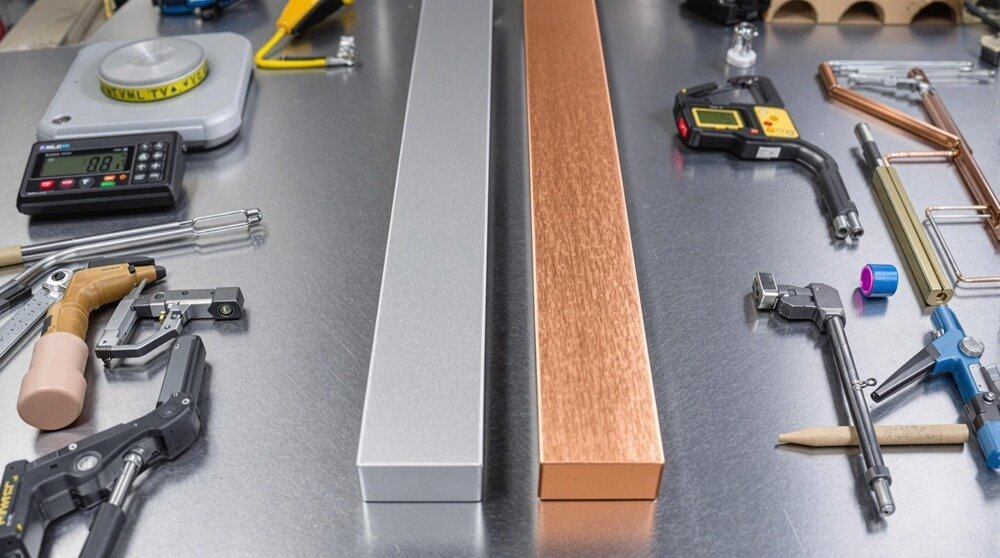
In every engineering office, there is a constant battle between Copper and Aluminum. Both metals can carry electricity, but they behave very differently. Copper is like a high-density energy carrier, while aluminum is more like a lightweight alternative. The choice usually comes down to three things: space, weight, and money.
Copper is the “International Standard.” It has 100% conductivity. Aluminum only has about 62%. This means that if you want to move the same amount of power, your aluminum bar has to be about 1.6 times bigger than the copper one. In a big building where you have plenty of room, this might not matter. But inside an electric car or a laptop, space is everything. This is why copper is almost always chosen for high-tech, compact electronics.
| Feature | Copper (Standard) | Aluminum (Alternative) | The Engineering Impact |
|---|---|---|---|
| Conductivity | 100% (High) | 62% (Lower) | Copper allows for much smaller designs. |
| Weight | Heavy (8.89 g/cm³) | Light (2.70 g/cm³) | Aluminum is better for overhead power lines. |
| Thermal Expansion | Lower | Higher (2x Copper) | Aluminum joints can loosen over time as they heat up. |
| Cost | Higher | Lower | Aluminum is often used in large solar farms to save money. |
Another huge factor is Thermal Expansion. When metals get hot, they grow a little bit. Aluminum grows much faster than copper. This is a problem for the bolts that hold the busbars together. If an aluminum bar grows and shrinks every time you turn the machine on and off, the bolts can slowly wiggle loose. This creates a “loose connection,” which can cause a fire. Copper is much more stable. It stays the same size even when it gets warm, which keeps the connections tight and safe for years.
However, aluminum has a secret weapon: Weight. It is about 70% lighter than copper. In airplanes or giant power grids that stretch for miles across the country, weight is more important than size. But for “New Energy Vehicles” and “Data Centers,” the space-saving power of copper is usually the winner. Copper is also much easier to recycle. While both are recyclable, recycling aluminum takes only 5% of the energy used to mine it, while copper takes about 15%. Both are environmentally friendly, but copper’s durability usually means it needs to be replaced less often.
8. Advanced Joining: Welding and Bolted Connections
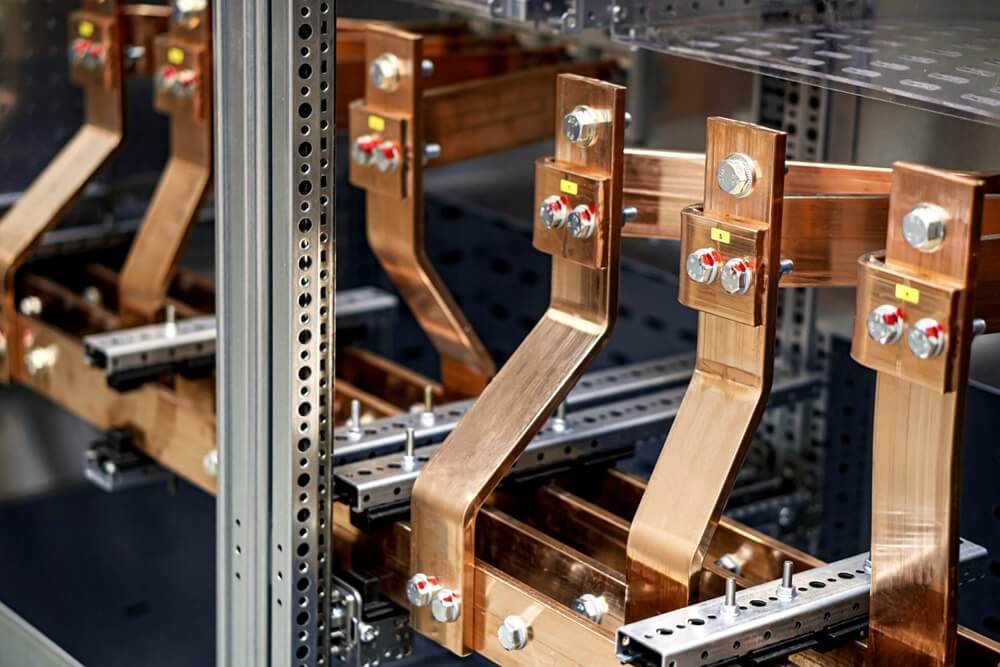
A busbar is only as good as the way it is connected to the rest of the system. If the joint where two busbars meet is weak, it becomes a “bottleneck.” Electricity will struggle to pass through, creating heat and wasting energy. To prevent this, expert manufacturers use three main methods to join copper together: Laser Welding, Ultrasonic Welding, and Bolted Connections.
Laser Welding is the modern gold standard. A high-power beam of light melts the edges of the copper bars, fusing them into one single piece. It is incredibly fast—taking only a fraction of a second. Because the laser is so precise, the heat stays in one tiny spot. This is very important for battery packs. You don’t want to get the sensitive battery cells hot while you are welding the busbar on top of them. Laser welding keeps the rest of the battery cool and safe.
Ultrasonic Welding is another high-tech method. Instead of using heat, it uses sound! It vibrates the two pieces of metal together so fast that they actually “rub” into each other and become one. This is a “cold” process, which is even safer for batteries. It is also the best way to join copper to aluminum, which is normally very hard to weld together.
For systems that need to be repaired or changed later, Bolted Connections are the way to go. But you can’t just use any old bolt. Engineers use Stainless Steel Fasteners. Why? Because copper is a soft metal. If you use a copper bolt, it might break. Stainless steel is much stronger and won’t rust. It’s also vital to use a “Torque Wrench.” This ensures that the bolt is tightened perfectly—not too loose (which causes sparks) and not too tight (which crushes the copper).
Pro Engineering Tip: In bolted joints, manufacturers often use “Self-Clinching Fasteners.” These are pressed into the copper so they stay there forever, making it much easier for a technician to screw in a bolt without needing to hold a nut on the other side.
9. Industry Applications: The Backbone of the Green Revolution
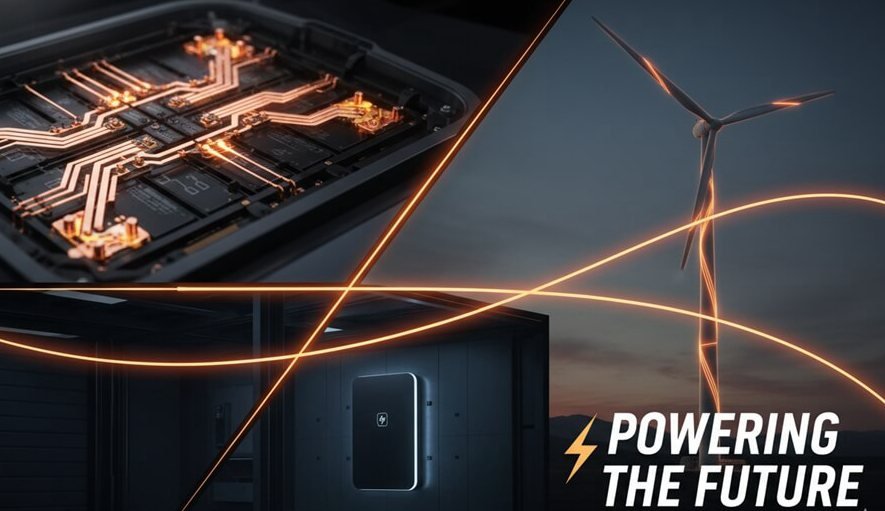
Copper busbars are the silent partners in almost every piece of high-tech equipment we use. As our world becomes more electric, these parts are appearing in places you might not expect. They are the “conductive backbone” that makes the green energy revolution possible. Here are the four biggest industries where copper busbars are changing the game:
- Electric Vehicles (EVs): This is the fastest-growing area. A typical EV has a huge battery pack made of thousands of small cells. Copper busbars connect all those cells together, carrying massive current to the motor so the car can accelerate from 0 to 60 in just a few seconds.
- Data Centers: Every time you watch a video online, a server somewhere is using a lot of power. Modern data centers use copper busbars in their “Power Distribution Units” because they are much more efficient than cables. They help keep the servers running 24/7 without wasting electricity.
- Renewable Energy: Wind turbines and solar farms generate electricity in remote places. That power has to be collected and sent to the city. Huge copper busbars are used in the “Inverters” that change the sun’s power into the electricity you use in your home.
- Industrial Mobility: Think of high-speed trains or giant electric forklifts in warehouses. These machines need thousands of amps of current. Copper busbars are the only thing strong enough and compact enough to handle that much power reliably.
In all of these applications, the traceability of the copper is very important. High-quality manufacturers use laser marking to put a QR code on every single bar. This allows a car company to know exactly which batch of copper was used, who made the bar, and even the result of the safety test it passed. This level of detail is what makes our modern world so safe and reliable.
10. Quality Control: Ensuring Decades of Performance
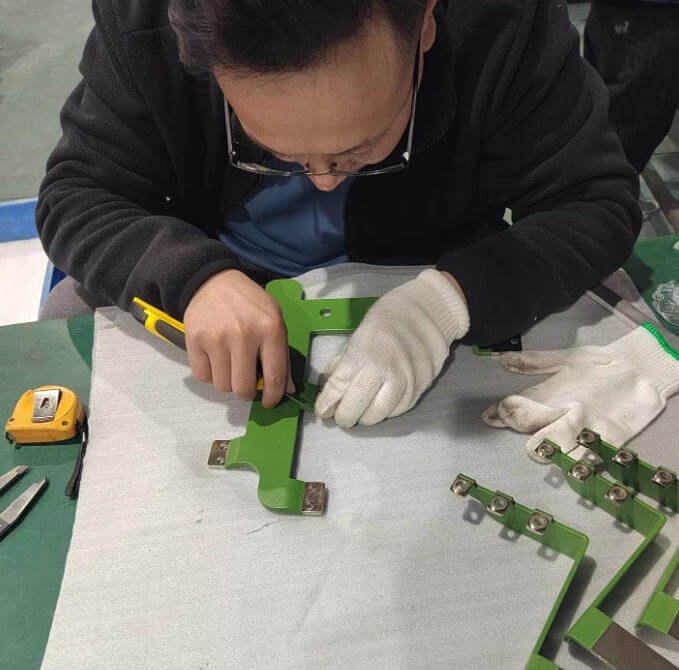
When you are building a system that moves thousands of volts, you cannot afford even one small mistake. A tiny crack in a bend or a hole that is 1 millimeter out of place can cause a total system failure. This is why Quality Control (QC) is the most intense part of busbar manufacturing. Professional plants follow global rules to make sure every part is perfect.
First, there is the CMM (Coordinate Measuring Machine). This is a robotic arm that touches the copper bar in hundreds of spots. It checks the shape against a 3D computer model. If the bend is off by even 1 degree, the machine knows. This ensures that when the bar arrives at the factory, it fits into the car or the machine perfectly every time.
Second, we have Dielectric Testing. Manufacturers hit the insulated part of the busbar with a huge surge of voltage—much higher than it will ever see in real life. This is to see if the insulation has any tiny holes. If the electricity “leaks” through, the part is rejected. This guarantees that a person touching the insulated part of a busbar will always be 100% safe.
Finally, there is the Torque and Resistance Test. Engineers measure the electrical resistance of the bar. If the resistance is too high, it means the copper is not pure or the plating is too thin. By checking every single part, manufacturers ensure that the busbar will do its job for 20 or 30 years without needing to be replaced. Standards like ISO 9001 and IATF 16949 are the “passports” that allow these parts to be used in the most advanced cars and airplanes in the world.
Frequently Asked Questions (FAQ)
Q: What is the benefit of nickel-plated copper over raw copper?
A: Raw copper turns brown and green when exposed to air (oxidation). This increases resistance and causes heat. Nickel plating stops this oxidation, keeps the connection clean, and helps the busbar handle higher temperatures in battery packs.
Q: Why are busbars flat instead of round like wires?
A: Flat bars have a much larger surface area. This allows them to cool down faster. They are also much easier to stack and bolt together, making them more compact for tight spaces like an electric vehicle chassis.
Q: Can I use aluminum busbars in an electric vehicle?
A: Some manufacturers do, but it is difficult. Because aluminum is less conductive, the bars must be much thicker. This takes up valuable space that could be used for more battery cells. Copper is usually preferred for its space efficiency.
Q: Is it okay to bend a busbar manually with a hammer?
A: No. Hitting copper with a hammer can create “stress points” and uneven thickness. Industrial CNC bending or stamping ensures the metal stretches evenly, keeping it strong and preventing “hot spots” where electricity might struggle to flow.
Q: How do you know what size busbar to use for a 1000 Amp system?
A: Engineers use the “Current Capacity” tables. For 1000 Amps, they might choose a single 60mm x 10mm bar or a stack of smaller bars. They also consider the room temperature; if it’s hot, they will choose a larger bar to stay safe.
Q: What does the “UL 94-V0” rating mean for busbar insulation?
A: It is a fire safety rating. It means the insulation is flame retardant. If a fire starts nearby, the insulation will not feed the fire and will stop burning within 10 seconds of the flame being removed.
Conclusion: The Foundation of an Electric World
The copper busbar is far more than just a simple piece of metal. It is a highly engineered component that sits at the intersection of material science, mechanical design, and electrical safety. From the high-purity C110 copper used to move electrons to the advanced laser-welding techniques that join them together, every part of a busbar is designed for maximum efficiency.
As we continue to build a world powered by clean energy, the demand for high-performance copper solutions will only grow. Whether it is moving massive currents in a fast-charging station or connecting the cells of a long-range EV battery, copper busbars ensure that electricity is delivered safely and reliably. By understanding the physics of sizing, the benefits of plating, and the importance of precision fabrication, we can create energy systems that are smaller, lighter, and much more powerful.
Ultimately, choosing the right busbar is about choosing reliability. In a world where we depend on power for everything from our phones to our transportation, there is no room for second-best. Precision-engineered copper busbars are the silent heroes that will keep our electric future moving forward for decades to come.