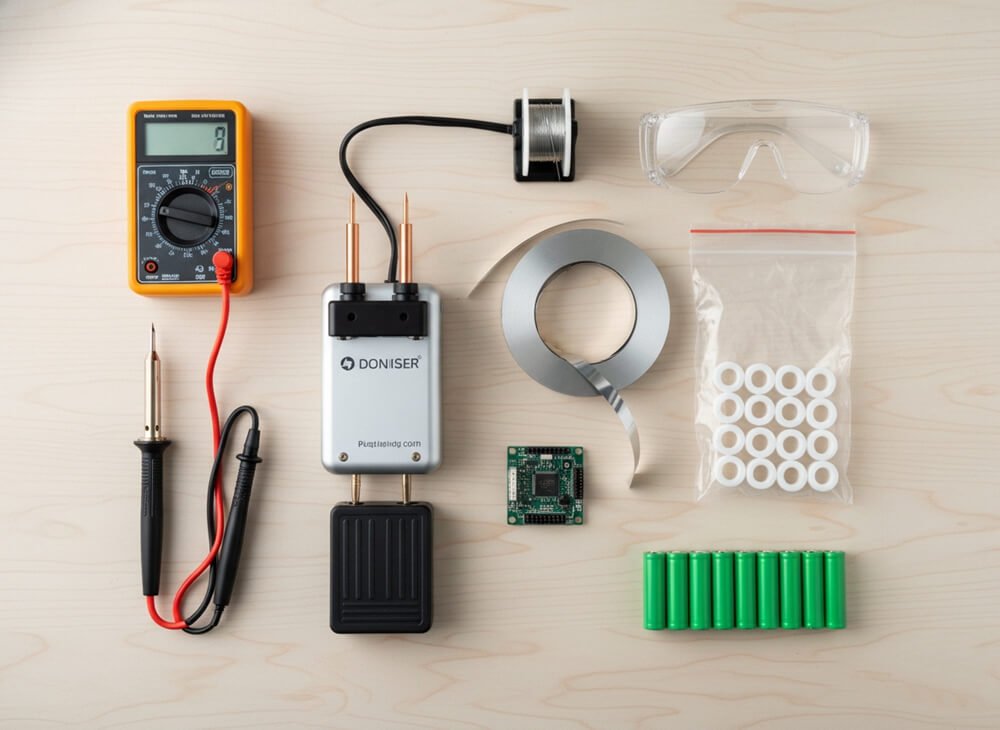
Imagine cruising down an open highway on a warm afternoon. Deep beneath your feet sits an electric car battery pack humming with 800 volts of pure energy. Suddenly, a tiny piece of road gravel kicks up, or a microscopic defect deep inside an electrical terminal breaks loose. A bright blue spark jumps across an unprotected gap. In less than three seconds, internal temperatures surge beyond 1,000 degrees Celsius. Toxic white fumes blast from the undercarriage. Burning jets of gas shoot outward, melting metal brackets and threatening everyone inside the car. Electric vehicle sales shot up by 35 percent in 2023 alone, capturing 18 percent of all global car purchases. As millions of these high-voltage packs power our daily commute, electric forklifts, and neighborhood energy storage systems, one vital system keeps peace of mind alive: battery insulation.
Many people treat battery insulation like a simple wrap of colored tape or a cheap piece of foam. That mistake ruins equipment, causes dangerous house fires, and costs car owners thousands of dollars. Proper insulation is not a cosmetic cover. It is an active safety shield engineered to control high-energy physics. It prevents high-voltage electrical arcing, blocks the deadly domino effect of thermal runaway, cushions cells from bone-jarring road vibrations, and keeps you compliant with strict international laws. In this guide, we dive into the physical chemistry of battery fires, uncover the brutal engine heat that secretly kills car batteries, break down international vehicle safety rules, and explain why high-quality insulation is the absolute backbone of battery engineering.
Table of Contents
1. What Is Battery Insulation and Why Is It a Primary Safety System?
Quick Summary: Battery insulation is an active multi-hazard safety barrier that prevents dangerous electrical short circuits, stops runaway cell fires from spreading, absorbs dynamic physical shocks, and seals out moisture and corrosive chemicals. It is a mandatory engineering safeguard across all high-energy storage systems.
When people think about insulation, they often think about warm sweaters or pink fiberglass stuffed into attic walls to keep out winter drafts. Battery insulation does protect against the cold, but its job is far tougher. Inside a modern high-density battery pack, space is fiercely contested. Engineers squeeze hundreds or even thousands of individual cells into tight, enclosed metal boxes to deliver maximum driving range and compact storage. In newer vehicle architectures, the physical gap separating one cell from the next is often smaller than one single millimeter. That is thinner than the edge of a credit card!
Yet across that hair-thin corridor, voltages routinely climb to 400 volts or even 800 volts. During rapid acceleration or high-speed charging, intense currents generate substantial warmth. If that tiny gap fails to contain the electrical pressure, electricity breaks through the air. An electric arc erupts. Sparks fly, metal melts, and the battery shorts out violently. This is why engineers treat battery insulation as a complete four-dimensional safety barrier rather than a simple wrapper:
- The Dielectric Shield: It forms a non-conductive electrical wall that prevents high voltages from arcing between positive tabs, negative casings, metal busbars, and vehicle chassis parts.
- The Thermal Firewall: It acts as a firebreak that slows heat transfer, blocks localized hot spots, and keeps an overheating cell from lighting neighboring cells on fire.
- The Mechanical Shock Absorber: It acts as a dynamic cushion that soaks up road bumps and vibration while flexing smoothly as cells expand and contract during everyday charging.
- The Chemical and Moisture Seal: It locks out humid air, prevents condensation from forming conductive water tracks, and neutralizes leaking battery acids before they corrode structural metal.
In our battery testing facilities, we see firsthand what happens when builders treat insulation as a minor cosmetic detail. A pack built with premium cells and sophisticated software will still fail catastrophically if its insulation breaks down. Quality insulation is the foundational backbone that keeps clean energy safe, predictable, and durable.
Think of a battery pack like an energetic reservoir. Millions of chemical reactions are waiting to release their energy. When you guide that energy through copper wires and precision nickel connectors, it turns wheels, powers tools, and keeps lights glowing. But if an insulation barrier rips or melts, that energy escapes all at once. Proper insulation ensures that immense energy stays safely locked inside its intended path.
2. What Triggers Thermal Runaway and How Does Insulation Stop the Domino Effect?
Quick Summary: Thermal runaway is an unstoppable chemical chain reaction where a battery cell generates heat faster than it can dissipate, ending in venting, fire, and explosions. High-temperature insulation barriers act as physical firewalls, blocking 1,000°C flames and preventing the fire from cascading into adjacent cells.
Thermal runaway is the single most terrifying failure mode in the battery industry. It is not an ordinary, slow-burning fire that you can put out with a bucket of water or a standard fire extinguisher. It is a self-accelerating, self-feeding chemical reaction that produces its own oxygen as it burns. Once thermal runaway begins inside a lithium-ion cell, no external firefighting method can stop the reaction inside that individual can. The only viable engineering solution is containment: you must stop that single burning cell from setting off the cells right next to it.
The Four Fatal Stages of Thermal Runaway
To understand why insulation barriers are essential, we must examine the chemical dominoes that tumble inside a failing cell:
- Stage 1: Breakdown of the Microscopic SEI Layer (80°C to 120°C): The Solid-Electrolyte Interphase (SEI) is a protective film only nanometers thick on the negative anode. When temperatures rise past 80 degrees Celsius due to severe overcharging, physical damage, or outside heat, this film dissolves. The bare graphite anode reacts directly with the liquid electrolyte, releasing flammable hydrocarbon gases and generating internal heat.
- Stage 2: Separator Melting and Direct Internal Short (130°C to 170°C): Standard microporous separators are made of polyethylene (melting near 130°C) or polypropylene (melting near 165°C). As internal heat climbs, the separator softens, tears, and shrinks away. The positive cathode and negative anode touch directly across a broad area, creating a direct internal short circuit. Massive electrical currents dump into this short, causing temperatures to rocket upward at over 100 degrees Celsius per minute.
- Stage 3: Cathode Breakdown and Oxygen Liberation (180°C to 240°C): At this tipping point, the metal oxide crystal structure of the cathode (such as nickel, manganese, and cobalt formulations) begins to decompose. This chemical breakdown releases pure oxygen gas straight into the sealed battery can. With intense heat, vaporized organic solvents, and pure oxygen trapped inside, the battery becomes an explosive chemical furnace.
- Stage 4: Explosive Venting and Ejecta Blast (Above 500°C to 1,300°C): Internal gas pressures spike dramatically until the cell safety vent bursts open. A roaring torch of burning gas, aerosolized liquid electrolyte, and red-hot metallic ejecta blasts from the vent. Temperatures at the vent nozzle regularly reach 1,000 degrees Celsius to 1,300 degrees Celsius.
“When an uninsulated cell vents, its intense radiant and conductive heat immediately cooks neighboring cells past their self-heating limits. Within seconds, cell two ignites, then cell three, turning a single localized defect into a multi-megawatt battery pack blaze.”
How Inter-Cell Barriers Stop the Domino Effect
Heat travels in three ways: conduction through physical touch, convection through hot moving gases, and radiation through glowing infrared waves. In an uninsulated pack, a burning cell transfers heat to its neighbors through all three pathways at once. The bare metal walls touch, conduction dumps hundreds of degrees into the next cell, and the domino effect takes over.
Specialized inter-cell thermal barriers act like firebreaks cut through dry forest timber. By placing ultra-low conductivity materials—such as encapsulated silica aerogels, microporous fumed silica boards, and phlogopite mica plates—between cell faces, you block all three heat transfer paths. Even when one cell is burning at 1,000 degrees Celsius on one side of the barrier, the reverse side stays below 80 degrees Celsius. The neighboring cells remain safely below their critical tipping point. The failing cell vents its energy safely through the exhaust port, the fire burns out harmlessly, and the rest of the battery pack survives undamaged.
| Thermal Runaway Stage | Temperature Range | Internal Chemical Reaction | Insulation Barrier Role |
|---|---|---|---|
| Phase 1: Interphase Breakdown | 80°C to 120°C | SEI layer dissolves; anode reacts with liquid solvent | Buffers external heat soak; delays self-heating onset |
| Phase 2: Separator Collapse | 130°C to 170°C | Polymer separator melts; dead short circuit sparks | High-temperature ceramic separator coating resists shrinkage |
| Phase 3: Cathode Decomposition | 180°C to 240°C | Cathode releases oxygen; self-feeding combustion begins | Absorbs swelling pressure; prevents mechanical cell breach |
| Phase 4: Explosive Venting | 500°C to 1,300°C | Safety vent ruptures; torch flames and molten ejecta erupt | Blocks 1,300°C flame; stops heat from jumping to adjacent cells |
3. How Does Electrical Arcing Occur and Why Are Dielectric Barriers Vital?
Quick Summary: High-voltage battery systems generate immense electrical fields that can ionize air and cause explosive arc flashes. Dielectric insulation barriers physically block electrical conduction pathways, preventing short circuits between live busbars, metal casings, and closely spaced cells.
Electricity is always looking for an excuse to jump. In low-voltage systems like a 12-volt lawnmower battery, you can leave terminals exposed to open air with very little risk of an arc jumping across empty space. But when you build an electric vehicle battery pack running at 400 volts, 800 volts, or even 1,000 volts, the rules of physics change completely. Under high voltage, strong electric fields can rip electrons right out of surrounding air molecules. This process, known as electrical breakdown or ionization, turns ordinary non-conductive air into a glowing, conductive plasma channel. The result is an explosive electrical arc flash.
An electrical arc flash is not just a polite spark. It is a blinding explosion. Arc flashes generate temperatures exceeding 2,000 degrees Celsius—hotter than the surface of molten steel. The extreme heat instantly vaporizes nearby copper busbars and nickel strips, creating high-pressure blast waves that rip open battery enclosures and shower everything in white-hot molten metal droplets. To prevent air ionization and stop arcs from forming, battery engineers rely on strict dielectric barrier principles:
Managing Creepage and Clearance Distances
Electrical engineers measure safety using two distinct geometric parameters:
- Clearance Distance: The shortest distance through air between two conductive parts of opposing polarity.
- Creepage Distance: The shortest path across the physical surface of a solid insulating material separating two conductors.
In a tightly packed vehicle battery, maintaining wide air clearances is physically impossible. You cannot leave two inches of empty air between every busbar and the aluminum casing without making the battery pack the size of a shipping container! This is where solid dielectric barriers step in. By placing thin, rigid insulating barriers—such as folded ITW Formex™ polypropylene sheets—between busbars and enclosure walls, you create physical walls that arcs cannot cross. An arc cannot travel in a straight line through solid plastic, forcing electricity to take an extraordinarily long detour around the barrier that exceeds the voltage’s jump limit.
Dielectric Breakdown Strength
When high voltage presses against an insulating film, the material must resist electrical puncture. High-performance films like polyimide (Kapton®) deliver dielectric breakdown strengths exceeding 7,000 volts per mil (0.025 mm). That means an ultra-thin film, no thicker than a piece of notebook paper, can easily hold back thousands of volts without puncturing. Polyester (PET) films provide roughly 5,000 volts per mil, making them an outstanding, cost-effective choice for wrapping cylindrical cell bodies.
The Dangerous Positive Terminal Shoulder Rim
In standard cylindrical cells (like 18650, 21700, and 4680 formats), the entire steel outer body of the can is connected directly to the negative terminal. The positive terminal button sits right on top, separated from the negative can shoulder by less than a single millimeter! When technicians or automated spot welders attach nickel connection strips across the battery, a slight misalignment, vibration, or metal burr can cut through the thin plastic wrapper. That creates a dead short circuit directly across the cell terminals. Placing an adhesive-backed dielectric washer (made of vulcanized fiber barley paper or polyimide) directly over the positive shoulder creates a physical shield that prevents instant dead shorts during welding and rough driving.
4. Which Global Regulations and Safety Standards Mandate Battery Insulation?
Quick Summary: International safety standards like UNECE GTR20, China GB 38031, UL 94, and UL 2580 legally mandate battery insulation. These laws require battery packs to resist thermal runaway propagation for at least five minutes, ensuring vehicle occupants have sufficient time to safely evacuate.
You cannot simply build a battery pack in your garage, drop it into a car, and sell it on the open market. To protect the public from catastrophic fires and toxic gases, international regulatory bodies and engineering standards organizations enforce strict legal safety rules. If a battery pack design cannot pass these demanding physical tests, it cannot be legally sold or registered in major automotive markets. Almost every one of these regulations directly dictates how insulation materials must perform:
The 5-Minute Passenger Evacuation Mandate: UNECE GTR20 and China GB 38031
The United Nations Global Technical Regulation on Electric Vehicle Safety (UNECE GTR20) and China’s mandatory national standard (GB 38031-2020) are the world’s most influential battery safety benchmarks. Both regulations address the thermal runaway hazard directly through the famous five-minute passenger egress rule.
During certification testing, safety engineers deliberately trigger thermal runaway inside a single cell in the center of a fully charged battery pack using an internal heating cartridge, nail penetration, or severe overcharging. The legal requirement is absolute: from the exact second the first cell enters thermal runaway, the battery pack must prevent fire, open flames, and toxic smoke from entering the passenger cabin for at least five full minutes. It must also trigger an immediate audio-visual alarm on the dashboard. Those five minutes give drivers time to pull over, unbuckle children, and move away from the vehicle before fire breaches the enclosure. The only way to survive this test is by installing high-grade inter-cell thermal barriers and non-combustible mica pack lid liners that contain blast pressures and delay fire propagation.
Underwriters Laboratories: UL 94 and UL 2580
In North America and global industrial equipment markets, Underwriters Laboratories standards establish the benchmark for material flammability and module integrity:
- UL 94 Flammability Ratings: All polymer and plastic insulation components used inside battery packs must undergo standardized flame testing. The minimum baseline for critical barriers is UL 94 V-0, which mandates that the material must extinguish open flames within 10 seconds without dropping burning plastic particles. Premium structural barriers often achieve UL 94 5VA, which subjects the material to a punishing flame source five times more severe than standard tests without allowing burn-through.
- UL 2580 (EV Battery Safety): This standard evaluates whole-pack safety under severe mechanical and environmental abuse, including drop impacts, total water immersion, extreme mechanical crush forces, and external bonfire exposure. Robust insulation prevents internal cell shorting during severe frame deformation.
International Benchmarks: IEC 62619 and SAE J2929
The International Electrotechnical Commission standard IEC 62619 establishes safety rules for industrial lithium batteries used in forklifts, automated guided vehicles (AGVs), trains, and large stationary energy storage systems (BESS). It requires rigorous thermal propagation testing to prove that a fire inside one battery rack shelf cannot leap to the shelves above or below it. Similarly, the Society of Automotive Engineers standard SAE J2929 defines propulsion battery safety criteria to ensure that electrical isolation remains intact even after a major vehicle collision.
| Regulatory Standard | Governing Body / Region | Key Test Requirement | Mandatory Insulation Role |
|---|---|---|---|
| UNECE GTR20 | United Nations (Global) | 5-minute escape window without cabin fire or smoke | Inter-cell thermal barriers; fireproof mica enclosure shields |
| GB 38031-2020 | National Standard (China) | Zero thermal propagation across battery modules | High-temperature ceramic and aerogel interstitial barriers |
| UL 94 (V-0 / 5VA) | Underwriters Laboratories (USA) | Self-extinguishing flammability within 10 seconds | Flame-retardant polymers (Formex PP, Kapton, Nomex aramid) |
| UL 2580 | Underwriters Laboratories (Global) | Crush, fire resistance, and drop impact survival | Mechanical cushioning and puncture-resistant dielectric wraps |
| IEC 62619 | International Electrotechnical Commission | Industrial stationary fire and thermal abuse safety | Inter-rack firewalls and electrical creepage barrier plates |
5. Why Is Engine Bay Heat Deadlier to Batteries Than Winter Freezing?
Quick Summary: Unprotected batteries face extreme radiant heat in engine bays, where exhaust manifolds and turbochargers exceed 500°C (1,000°F). High heat evaporates battery electrolyte and warps internal plates, cutting battery lifespan in southern climates to just 2 to 3 years compared to 4 to 6 years in cool northern regions.
Every winter, auto parts stores fill up with customers buying replacement car batteries. Because dead batteries happen frequently on freezing mornings, drivers naturally assume that cold weather is the number-one killer of batteries. That assumption is flat wrong. Heat kills batteries; cold simply delivers the funeral notice.
The Engine Bay Oven
Modern vehicle engine compartments are crowded, tightly packed heat traps. Between turbochargers, catalytic converters, radiators, and diesel particulate filters (DPFs), exhaust gas temperatures climb past 500 degrees Celsius (over 1,000 degrees Fahrenheit) while climbing hills or driving at highway speeds. Even after you turn off the ignition, air stops circulating through the radiator grille, causing engine bay temperatures to climb higher for 30 minutes in a phenomenon known as heat soak.
When a traditional lead-acid starting battery sits unprotected in that blistering heat, the laws of chemistry take over. Chemical reaction rates double with every 10-degree Celsius rise in temperature (Arrhenius’ Law). Inside the battery, the water in the liquid sulfuric acid electrolyte boils off into vapor. As the water evaporates, internal lead plates dry out and corrode rapidly. The positive grid structure warps, active chemical paste flakes off the plates, and the battery case swells under internal pressure. In lithium batteries, sustained heat breaks down the liquid organic carbonates, permanently robbing the cells of storage capacity.
Real-world automotive data proves this phenomenon without question:
In cool northern regions, an ordinary car battery easily lasts 4 to 6 years. But in tropical or southern climates (such as Florida, Texas, and Arizona), the identical battery in the identical car lasts only 2 to 3 years! When drivers or careless mechanics discard the factory-installed insulation jacket, the battery absorbs intense radiant engine heat every single day. Studies reveal that running a vehicle without its factory battery insulation sleeve can reduce battery lifespan by up to two-thirds.
The Winter Trap: Cold Cranking Loss and Lithium Plating
If heat does all the damage, why do batteries fail when winter arrives? Because cold weather slows down chemical reactions. When ambient temperatures drop below freezing (0°C / 32°F), the battery’s internal resistance surges, and available starting power (Cold Cranking Amps) drops by 30 to 50 percent. A battery that was silently damaged by summer heat might have enough power to start an engine in warm weather, but the moment cold weather thickens the engine oil, the weakened battery collapses.
For lithium iron phosphate (LiFePO4) storage batteries, winter brings an even deadlier operational hazard: lithium plating. Charging a lithium battery below 0 degrees Celsius causes lithium ions to form metallic lithium deposits on the anode surface instead of sliding into the graphite layers. These razor-sharp lithium needles grow like stalagmites until they pierce the separator, causing an irreversible internal short circuit. Installing insulated battery boxes paired with low-wattage heating pads ensures the cells stay in their safe charging window without wasting valuable power.
| Operating Climate | Average Battery Life | With Factory Insulation Sleeve | Without Factory Insulation Sleeve |
|---|---|---|---|
| Temperate / Northern Regions | 4 to 6 Years | Maintains full design lifespan; slows winter freeze | Lifespan drops to 3 to 4 years; vulnerable to cold snap |
| Hot / Southern Regions (e.g., Florida) | 2 to 3 Years | Shields radiant engine heat; preserves electrolyte | Lifespan drops to 1 to 1.5 years; severe plate dry-out |
| Sub-Zero Stationary Storage (< 0°C) | Vulnerable to Plating | Enclosure holds heat; tiny 15W pad enables safe charging | BMS low-temp cutoff triggers; charging stops completely |
6. How Does Insulation Prevent Mechanical Abrasion and Accommodate Cell Breathing?
Quick Summary: Battery cells physically swell during charge and discharge cycles, while road travel introduces constant vibration. Flexible elastomeric insulation pads act as dynamic cushions, absorbing cyclic expansion forces to prevent internal separator crushing and protecting outer cell wrappers from abrasive wear.
A battery pack is not a solid, motionless brick of metal. It is an active, breathing mechanical assembly. Every single time you plug an electric vehicle into a charger, millions of tiny lithium ions migrate out of the positive cathode crystal structure and squeeze themselves between the atomic layers of the graphite anode. This physical migration forces the anode material to expand. During high-current discharge, the reverse happens, and the electrodes contract. In modern high-energy-density cells, this physical movement causes the thickness of a cell stack to expand and contract with every single journey.
This cyclic swelling, often referred to by battery designers as cell breathing, poses a massive mechanical dilemma. If you bolt a stack of prismatic or pouch cells tightly inside a solid aluminum frame with zero flexible cushioning, that swelling pressure has nowhere to go. Over hundreds of charge cycles, internal compressive forces can skyrocket beyond 5 megapascals. That extreme pressure crushes the microscopic pores in the polymer separator. When separator pores collapse, liquid electrolyte is squeezed out like water from a pressed sponge. Without liquid electrolyte carrying ions between the plates, internal electrical resistance climbs sharply, creating localized heat spots that degrade battery life and trigger early failure.
On the flip side, leaving cells loose inside an oversized enclosure creates an equally dangerous hazard: vibrational abrasion. Electric cars, delivery vans, e-bikes, and industrial forklifts travel over bumpy pavement, potholes, and railroad crossings every day. That continuous road chatter shakes the battery pack relentlessly. If cells have room to move, they rattle, bounce, and rub against each other thousands of times per mile.
Constant friction acts like fine sandpaper. In just a few months of normal driving, vibration can rub through the thin factory plastic film covering the metal cell cans. Once that outer wrapper wears away, bare metal can touches bare metal can. That physical contact bypasses built-in safety controls, creating an instant external short circuit that can ignite the entire module. High-performance mechanical insulation solves both issues through carefully tuned material science:
- Tuned Young’s Modulus: Mechanical engineers select elastomeric insulation materials based on their elasticity rating (Young’s Modulus). If a pad is too stiff, it acts like a solid wall, transferring destructive expansion forces straight into the module tie-rods and cell casings. If it is too soft, it squashes completely flat under light pressure, offering zero mechanical support and letting the cells rattle loose. A properly calibrated material provides firm, supportive resistance while yielding just enough to absorb maximum cell swelling.
- Superior Compression Set Resistance: Standard everyday packaging foams break down quickly when compressed. After being squeezed a few dozen times, ordinary foam stays permanently crushed, leaving loose gaps inside the pack. Industrial silicone foams (such as Rogers BISCO® series) and specialized polyurethane cushions exhibit virtually zero compression set. Even after years of heavy cycling across extreme hot and cold temperatures, these resilient foams spring back to their exact original thickness, maintaining constant, uniform pressure against the cell faces.
- Ceramifiable Silicone Hybrid Protection: Advanced battery packs now deploy ceramifiable silicone rubber pads. During regular vehicle operation, these pads act as soft, elastomeric shock absorbers that dampen road vibration and breathe with the cells. But if an emergency fire erupts and temperatures climb above 500 degrees Celsius, an in-situ chemical reaction takes place. The rubber matrix ceramifies, transforming into a hard, rigid ceramic shield capable of withstanding intense mechanical blast pressures without crumbling.
7. How Does Insulation Contain Corrosive Acid Leaks and Toxic Contaminants?
Quick Summary: Battery insulation materials defend against chemical destruction by locking out atmospheric humidity, preventing condensation-induced electrical tracking, and neutralizing corrosive battery acid leaks before they eat through vehicle chassis steel and contaminate local ecosystems.
Batteries are powerful chemical factories enclosed in metal and plastic shells. Inside their casings, aggressive liquid chemicals are constantly reacting to generate electric current. In traditional lead-acid starting batteries, that liquid is a concentrated bath of sulfuric acid. In modern lithium-ion packs, the electrolyte consists of flammable organic carbonate solvents containing dissolved lithium hexafluorophosphate (LiPF6) salts. When batteries are subjected to years of road vibration, seasonal temperature swings, and heavy charging loads, microscopic cracks can develop around terminal posts, weld joints, and emergency pressure vents. When these fluids leak out, the hazards multiply quickly.
Neutralizing Sulfuric Acid in Automotive and Marine Fleets
In heavy transport trucks, commercial fishing boats, agricultural machinery, and stationary backup power banks, sulfuric acid venting is a notorious threat. As lead-acid batteries heat up during heavy charging, acidic vapors and fine liquid droplets escape through the vent caps. Sulfuric acid is intensely corrosive. It attacks painted steel battery trays, dissolves copper ground cables, corrodes delicate electronic sensors, and can eat completely through vehicle frame rails in just a few seasons.
To eliminate this destructive rot, fleet operators rely on specialized acid-neutralizing battery mats (such as The Original Battery Mat and BSTFLEX protection kits). These heavy-duty mats are constructed from needle-punched nonwoven synthetic felts impregnated with proprietary alkaline neutralizing agents. The felt acts like an intelligent sponge. When sulfuric acid drips or mists onto the mat, capillary action pulls the liquid deep into the fiber core. The chemical neutralizing agents instantly react with the acid, converting dangerous liquid into harmless, inert sulfate salts and water. The battery tray stays bone-dry, structural steel remains completely rust-free, and expensive wiring harnesses are protected from chemical damage.
The Invisible Danger: Hydrofluoric Acid Formation
In lithium-ion battery packs, chemical containment takes on a much more dangerous dimension. Lithium-ion electrolyte contains fluorine compounds. If a cell vents its electrolyte vapor into the battery enclosure and that vapor meets ordinary atmospheric humidity, a rapid chemical reaction occurs. The LiPF6 salt hydrolyzes with water molecules in the air to produce airborne hydrofluoric acid (HF).
Hydrofluoric acid is terrifyingly dangerous. It dissolves automotive glass, corrodes structural aluminum casing walls, and eats through circuit board traces. More critically, hydrofluoric acid gas is an extreme health hazard. If inhaled by vehicle occupants or emergency rescue crews, it causes severe respiratory damage and deep chemical burns. Robust enclosure insulation, moisture-impermeable perimeter gaskets, and gas-tight terminal boots are essential to seal out external humidity and contain vented gases until they can be safely routed out through the vehicle exhaust port.
“Improper disposal or uncontained leakage of spent batteries poses severe ecological risks. A single rotting button cell in a landfill can release heavy metals capable of contaminating up to 600 tons of drinking water.”
Preventing Heavy Metal Environmental Disasters
The safety mandate of battery insulation extends all the way to the end of a battery’s lifecycle. Inside spent batteries lie heavy metals such as lead, cadmium, nickel, and mercury. If uninsulated or broken batteries are abandoned in landfills or scrapyards, acidic rainwater leaches these toxic heavy metals directly into agricultural soils and drinking water aquifers. Once absorbed into the human body, heavy metals cause irreversible brain damage, central nervous system breakdown, chronic anemia, and severe kidney failure. Durable insulating covers, puncture-resistant terminal caps, and sealed casing liners keep old batteries chemically isolated and safe to handle during storage, decommissioning, and high-volume recycling.
8. How Do You Calculate Heat Loss and Heating Energy for Battery Enclosures?
Quick Summary: Using the steady-state thermodynamic heat loss formula, builders can calculate the exact heating power needed to keep cold-sensitive lithium batteries warm. Adding two inches of rigid foam board (R-10) slashes required heating energy from hundreds of watts down to just 12.5 watts.
For solar homesteaders, remote communication site operators, and recreational vehicle builders, keeping lithium iron phosphate (LiFePO4) batteries warm during freezing winter weather is an absolute necessity. As we explored earlier, attempting to charge a LiFePO4 battery below 0 degrees Celsius causes irreversible lithium plating that destroys the cells. Many people install electric heating pads inside their battery compartment, only to find that their heaters drain the battery bank completely flat overnight! The culprit is almost always poor thermal insulation.
You do not have to guess how much insulation your battery box needs. By applying basic thermodynamic equations, you can calculate the steady-state heat loss of your enclosure with mathematical precision, allowing you to size your heating system so it consumes only a tiny fraction of your solar energy.
The Steady-State Thermal Conduction Equation
Heat always flows from a warm area to a cold area. To find out how many continuous Watts of thermal energy escape through the walls of an insulated battery enclosure, engineers use this straightforward thermodynamic formula:
Heat Loss (Watts) = [ (T_inside – T_outside) × Surface Area ] / [ R_value / 5.68 ]
Where:
• T_inside: Your desired battery operating temperature in degrees Celsius (°C).
• T_outside: The coldest expected outdoor winter temperature in degrees Celsius (°C).
• Surface Area: The total combined surface area of all six sides of the box in square meters (m²).
• R_value: The standard imperial thermal resistance rating of your insulation material.
• 5.68: The conversion factor linking imperial R-values to metric thermal resistance (RSI in m²·°C/W).
Practical Case Study: Sizing a 48V Off-Grid Storage Enclosure
Let us walk through a real-world scenario from our energy storage workshop. Imagine you have two 48-volt server-rack lithium batteries installed in an unheated garage. Together, the two batteries sit inside a protective box measuring 17.5 inches wide, 15 inches deep, and 18.25 inches high. When you calculate the surface area across all six sides (top, bottom, and four walls), the total exterior surface area is approximately 1.1 square meters (about 1,711 square inches).
You want to keep the batteries at a safe +4 degrees Celsius (40 degrees Fahrenheit) so they can accept solar charging every morning, while the winter night air outside drops to -6 degrees Celsius (20 degrees Fahrenheit). The temperature difference across your box walls is exactly 10 degrees Celsius. Look at how changing your insulation material impacts your continuous power consumption:
| Insulation Material & Thickness | R-Value Rating | Continuous Power Lost | Daily Energy Required | Monthly Power Draw |
|---|---|---|---|---|
| 1″ Basic Foam Board | R-5 | 25.1 Watts | 602 Watt-hours / day | 18.1 kWh / month |
| 2″ Rigid Extruded Polystyrene (Pink XPS) | R-10 | 12.5 Watts | 301 Watt-hours / day | 9.0 kWh / month |
| 3″ Closed-Cell Rigid Board | R-15 | 8.4 Watts | 201 Watt-hours / day | 6.0 kWh / month |
| 4″ Multi-Layer Polyisocyanurate | R-20 | 6.3 Watts | 151 Watt-hours / day | 4.5 kWh / month |
| 1″ Sealed Vacuum Insulation Panel (VIP) | R-50 | 2.5 Watts | 60 Watt-hours / day | 1.8 kWh / month |
The numbers reveal a massive engineering lesson! If you build your box using simple, budget-friendly 2-inch pink XPS foam board (R-10), the total continuous heat loss escaping into the cold garage is just 12.5 Watts. A tiny, low-wattage heating pad running on an automated thermostat consumes only 301 Watt-hours per day to keep your batteries completely safe. A single 100-watt solar panel can replenish that energy in less than three hours of winter daylight. But if you leave the enclosure uninsulated (R-1 or bare sheet metal), your heat loss exceeds 200 Watts, requiring nearly 5,000 Watt-hours per day just to keep the batteries from freezing!
The Fatal Penalty of Thermal Gaps
There is one crucial trap to avoid: never leave an uninsulated door or face on your battery box. Many DIY builders insulate five sides of their battery cabinet with thick foam, but leave the front door bare metal or uninsulated plywood so they can see the battery display screens. In thermal physics, heat moves rapidly through the path of least resistance. Because the uninsulated front face covers roughly 15 percent of the total box area, that single uninsulated wall will leak up to 80 percent of your total heat! Leaving a face open is like sitting inside a heavily insulated house during a snowstorm with the front window wide open. Always insulate the front access panel, and seal all cable penetration holes with closed-cell spray foam or rubber grommets to eliminate drafts.
9. High-Level Overview: What Classes of Insulation Materials Are Deployed?
Quick Summary: Battery packs rely on four primary material families: dielectric polymer films for high-voltage isolation, inorganic mica minerals and aramid papers for firebreaks, nanoporous aerogels and microporous boards for thermal runaway defense, and elastomeric silicone foams for mechanical shock absorption.
Because battery packs must solve completely different physical challenges in different zones, engineers never rely on a single material. Trying to use one universal material across an entire battery module is a recipe for failure. A thin plastic film that provides incredible electrical breakdown strength will melt in seconds during a fire. Conversely, a thick, rigid mica plate that easily blocks an open blowtorch flame is far too heavy, bulky, and stiff to wrap around an individual cylindrical cell. Modern pack architecture succeeds by deploying four distinct material families, each assigned to the specific job it does best:
1. Dielectric Polymer Films (Thin-Wall Electrical Protectors)
Polymer films are the premier choice for wrapping individual cell cans, lining narrow slot cavities, and shielding busbar connections where space is measured in microns. Materials like Polyimide (Kapton®), Polyester (PET / Mylar®), and flame-retardant Polypropylene (ITW Formex™ GK) pack massive dielectric strength (5,000 to 7,000+ volts per mil) into paper-thin sheets. Formex™ can even be scored and folded into complex 3D terminal covers that replace bulky molded plastic housings, saving weight and volume.
2. Inorganic Minerals and Aramid Papers (Non-Carbonizing Firewalls)
When an active fire erupts, organic plastics soften, melt, and burn into black carbon ash. Carbon is electrically conductive, meaning a burned plastic insulator turns into a short-circuit bridge. Inorganic minerals—most notably phlogopite and muscovite mica plates (such as Pyrodox HP5)—never burn, melt, or carbonize. They withstand open flame temperatures above 1,000 degrees Celsius while remaining true electrical insulators, serving as impenetrable firewalls lining battery pack lids and module dividers. Synthetic aramid papers (Nomex®) provide extreme tear and puncture resistance, protecting internal layers from sharp sheet metal edges.
3. Nanoporous Aerogels and Microporous Boards (Thermal Runaway Firebreaks)
To stop heat from conducting from one cell to its neighbor, packs require materials with the lowest thermal conductivity known to science. Silica aerogel felts and fumed silica microporous boards feature microscopic nanopores that eliminate gas convection, achieving thermal conductivities as low as 0.013 to 0.020 W/m·K. Engineered into ultra-thin profiles down to 0.6 millimeters, these materials create massive thermal drops across tiny gaps, keeping neighboring cells completely safe during a venting event.
4. Elastomeric Foams and Reactive Silicones (Dynamic Shock & Breathing Buffers)
To manage cell swelling and road chatter, designers turn to closed-cell silicone sponges, polyurethane foams, and EVA pads. These resilient materials act as mechanical springs that compress smoothly as cells breathe during charging, bouncing back with zero permanent deformation. Advanced ceramifiable silicones provide flexible shock absorption during normal daily driving, but chemically convert into rigid, non-flammable ceramic barriers when exposed to emergency fire temperatures above 500 degrees Celsius.
For an exhaustive breakdown of specific physical datasheets, dielectric strength values, and material-by-material engineering comparisons, be sure to read our dedicated companion guide: The Complete Battery Insulation Material Selection Guide.
| Material Family | Representative Materials | Primary Protective Role | Key Performance Strength |
|---|---|---|---|
| Dielectric Polymer Films | Polyimide (Kapton), PET, Formex PP | High-voltage electrical isolation | Ultra-thin profile; >7 kV/mil dielectric strength |
| Inorganic Minerals & Fibers | Phlogopite mica, Nomex aramid paper | Thermal runaway firewalls and lid barriers | Withstands >1,000°C without melting or carbonizing |
| Nanoporous Thermal Barriers | Silica aerogel felt, microporous board | Inter-cell thermal propagation prevention | Lowest thermal conductivity known (0.013 W/m·K) |
| Elastomeric Foams & Hybrids | Silicone foam (BISCO), ceramifiable rubber | Vibration damping and cell swelling buffer | Zero compression set; converts to ceramic in fire |
10. What Are the Real-World Financial and Operational Costs of Insulation Failure?
Quick Summary: Skipping insulation or using inferior materials causes catastrophic consequences: pack replacement bills exceeding $15,000, multi-million-dollar safety recalls, warranty cancellations, vehicle total losses, and severe environmental liability from heavy metal contamination.
When engineering deadlines loom, production schedules back up, or material budgets get squeezed, cutting corners on insulation can seem like an easy way to save time and money. Some builders convince themselves that bare factory cell wraps are plenty of protection, or that a few layers of household electrical tape will do the trick. Experience proves that insulation is the absolute worst place to cut corners. The cost of installing premium insulation is measured in pennies per cell. The cost of an insulation failure is measured in tens of thousands of dollars, severe legal liability, and destroyed brand reputation.
The $15,000 Pack Replacement Reality
In modern electric passenger cars, battery cells are tightly integrated into structural packs. When thermal runaway is successfully stopped by inter-cell barriers, servicing the battery is straightforward: technicians can replace a single damaged module and put the vehicle back on the road. But when insulation is missing or substandard, the fire sweeps across the entire pack. Once a high-voltage pack suffers widespread thermal runaway and casing deformation, it cannot be rebuilt. The entire assembly must be scrapped and replaced. In today’s automotive market, replacement costs for an electric car battery pack range from $15,000 to over $25,000—a sum that often exceeds the remaining market value of the entire vehicle!
Multi-Million-Dollar Safety Recalls
For commercial vehicle manufacturers, energy storage developers, and consumer device brands, insulation failures trigger nightmare recall campaigns. Recalling tens of thousands of vehicles to replace defective insulation barriers costs hundreds of millions of dollars. It triggers investigations by federal transportation agencies, invalidates insurance coverage, and damages consumer trust for years. A five-cent die-cut insulation gasket is literally the only thing standing between a profitable product line and corporate disaster.
11. Step-by-Step Guide: How to Properly Insulate a Battery Pack for Maximum Safety
Quick Summary: Insulating a battery pack safely requires six methodical steps: thoroughly inspect raw cell casings, apply positive terminal ring gaskets, heat-shrink outer dielectric sleeves, install flexible inter-cell cushions, spot-weld precision nickel conductors, and cover busbars with flame-retardant shields.
Whether you are assembling a custom lithium battery pack for an electric bicycle, building a stationary solar storage bank, or developing industrial equipment, following a strict insulation protocol ensures maximum safety and durability. Here is the six-step assembly workflow practiced by professional battery engineers:
Step 1: Thorough Cell Inspection and Cleaning
Never take battery cells straight out of shipping boxes and weld them into packs without inspection. Examine every single cell under bright light. Check for tiny scuffs, pinholes, or tears in the factory shrink wrap. Clean the metal positive terminals and negative can bases with 99 percent pure isopropyl alcohol to remove factory oils, grease, and dust. This ensures self-adhesive insulation rings stick with maximum bonding strength.
Step 2: Install Positive Terminal Insulating Rings
The positive shoulder of any cylindrical cell is its most vulnerable hazard zone. Apply a self-adhesive donut ring (made from traditional vulcanized fiber barley paper or polyimide film) over the positive button. Center the ring accurately so it completely covers the bare metal shoulder where the negative can crimps inward. This ring ensures that welded nickel connection strips cannot accidentally touch the negative can edge during spot welding or dynamic vibration.
Step 3: Install Secondary Outer Shrink Sleeving
If you are grouping cells into dense multi-row configurations, install a secondary PET layflat shrink sleeve over each cell. Slide the sleeve over the cell body and apply warm air from a hot air gun set to 100 degrees Celsius while rotating the cell evenly. In roughly 10 seconds, the sleeve shrinks uniformly, forming a tough, puncture-resistant dielectric skin capable of holding back thousands of volts.
Step 4: Insert Inter-Cell Buffers and Align Nickel Conductors
Never glue bare cell bodies directly to one another! Place a thin sheet of compressible silicone foam, Nomex aramid paper, or microporous insulation between cell rows. This layer cushions road shocks and absorbs cyclic breathing. When making electrical connections, always use precision-stamped, low-resistance pure nickel strips—such as those manufactured by Custom Nickel Strips Factory. High-purity nickel ensures low electrical resistance, preventing resistive heat buildup at weld points during heavy discharge.
Step 5: Shield Busbars and Balance Wiring
After spot-welding the nickel conductors to the cell terminals, immediately cover exposed metal surfaces with high-temperature polyimide (Kapton) tape. For larger multi-cell modules, install die-cut, folded flame-retardant polypropylene shields (such as Formex GK) directly over the entire busbar assembly before wiring the battery management system (BMS). Route all delicate BMS balance wires through protective braided fiberglass sleeving.
Step 6: Enclosure Lining and Thermal Verification
Line the interior floor, walls, and lid of your outer metal or plastic battery box with a flame-retardant barrier liner (such as phlogopite mica plate or silicone-fiberglass composite). Once the battery pack is fully assembled and sealed, place it on a test bench. Run a full charge and discharge cycle while monitoring the pack with an infrared thermal imaging camera. Verify that heat distribution remains completely uniform, with zero localized thermal hotspots across the busbars or terminals.
12. Frequently Asked Questions About Battery Insulation
Q1: Why does my car battery have a plastic or fabric wrap from the factory?
Automobile manufacturers install that wrap (called a battery insulating sleeve or blanket) primarily to protect your battery from intense engine bay radiant heat. Exhaust pipes, radiators, and turbochargers frequently exceed 100 degrees Celsius. The insulating jacket acts as a thermal shield, reflecting engine heat away, keeping the internal electrolyte liquid cooler, and preventing premature battery death.
Q2: Should I remove my car battery’s insulation blanket in the summer?
No, you should never remove the battery blanket in summer! Engine compartments get intensely hot during summer driving. Removing the blanket exposes the battery to direct heat soak, which causes the liquid electrolyte to evaporate, warps lead plates, and shortens battery life by up to two-thirds. The blanket protects the battery from heat, much like a thermos bottle keeps drinks cold on a hot beach.
Q3: Can I wrap my car battery in an ordinary household blanket?
No. You should never use a regular household blanket made of cotton or wool. Household fabrics absorb moisture, rot quickly, and catch fire easily. Furthermore, acidic vapors from the battery will quickly dissolve cotton fibers, turning the blanket into a corrosive rag. Always use purpose-built automotive wraps made from aluminized fiberglass, flame-retardant silicone, or acid-resistant polymer felt.
Q4: What is the difference between electrical and thermal battery insulation?
Electrical insulation blocks the flow of electric charges to prevent short circuits, arcing, and electrical shocks, using high dielectric materials like polyimide (Kapton), polyester (PET), and polypropylene (Formex). Thermal insulation restricts the flow of heat energy to maintain optimal operating temperatures and contain flames during thermal runaway, using materials like silica aerogel, microporous boards, and mica plates.
Q5: How does mica plate prevent thermal runaway from spreading?
Mica is a naturally occurring mineral that can withstand direct open flames above 1,000 degrees Celsius without burning, melting, or carbonizing. When an individual cell ruptures, mica barrier plates placed between modules block fire jets and deflect radiant heat, preventing adjacent cells from reaching their critical runaway temperature.
Q6: Can lithium iron phosphate (LiFePO4) batteries freeze?
While the internal chemicals of a lithium battery do not freeze into solid ice at ordinary winter temperatures, sub-zero cold dramatically slows down chemical kinetics. Attempting to charge a LiFePO4 battery below 0 degrees Celsius causes permanent damage through lithium metal plating on the anode, which can cause internal short circuits. Insulated battery enclosures retain warmth and allow small heating pads to keep cells in a safe charging zone.
Q7: Why do auto mechanics sometimes discard the battery jacket?
Mechanics often discard the original jacket because it became dirty, brittle, or soaked with acid over years of use, or because an aftermarket replacement battery was slightly larger than the original equipment, making the old sleeve fit too tightly. Other times, mechanics mistakenly believe the jacket is only meant for snowy northern winters. If a mechanic discards your jacket, always install a properly fitted replacement wrap.
Q8: What is the best insulation material for custom lithium battery packs?
The best approach combines multiple materials tailored to specific jobs: use self-adhesive barley paper or Kapton donut rings over the positive terminal shoulders, heat-shrink PET layflat tubing around individual cell bodies, resilient silicone foam pads between cell rows to absorb breathing, and heavy-duty Kapton tape over all busbars and nickel strip connections.
Q9: How does battery insulation prevent water and moisture damage?
Temperature swings cause air inside sealed battery enclosures to sweat, creating condensation along cold metal walls. If liquid water forms bridges across exposed terminals, it causes electrical leakage currents and rapid corrosion. Seamless hydrophobic insulation wraps, closed-cell silicone perimeter gaskets, and potted sealants keep water away from live electrical joints, preventing destructive short circuits.
13. Conclusion: Building Safer, Compliant, and High-Performing Battery Systems
Quick Summary: Battery insulation is not a decorative wrapping—it is a vital, non-negotiable safety system. Investing in top-tier dielectric barriers, thermal runaway firewalls, and mechanical cushions protects lives, ensures legal compliance, and guarantees long-term battery performance.
Every battery pack is an energetic reservoir waiting to release its power. When engineered with precision, high-energy battery packs deliver dependable, clean power that drives vehicles across continents, keeps heavy industrial machinery operating without emissions, and powers homes through stormy winter nights. But when shortcuts are taken and insulation is treated as a trivial afterthought, that same concentrated energy can turn destructive in fractions of a second.
As we have explored throughout this guide, proper battery insulation does far more than just cover bare metal:
- It establishes an unyielding dielectric wall that stops high-voltage electrical arcing and dead shorts.
- It builds a rugged thermal firewall that contains 1,300-degree flames and halts the domino effect of thermal runaway.
- It satisfies strict international safety mandates like UNECE GTR20 and GB 38031, providing the critical five-minute window that saves lives.
- It serves as an environmental and thermodynamic shield, repelling engine bay radiant heat in summer while protecting cells from sub-zero winter damage.
- It cushions delicate components against relentless road vibrations while allowing cells to breathe naturally throughout years of charge cycles.
Building high-performing, safe battery systems requires combining the finest insulation materials with precision electrical interconnections. Using high-conductivity conductors—such as precision-stamped pure nickel connectors from trusted specialists like Custom Nickel Strips Factory—ensures that electrical resistance stays ultra-low, connection joints stay cool, and your battery packs deliver safe, peak performance year after year.